The Numbers, the Soft Power, and the Garden
The Value of Music
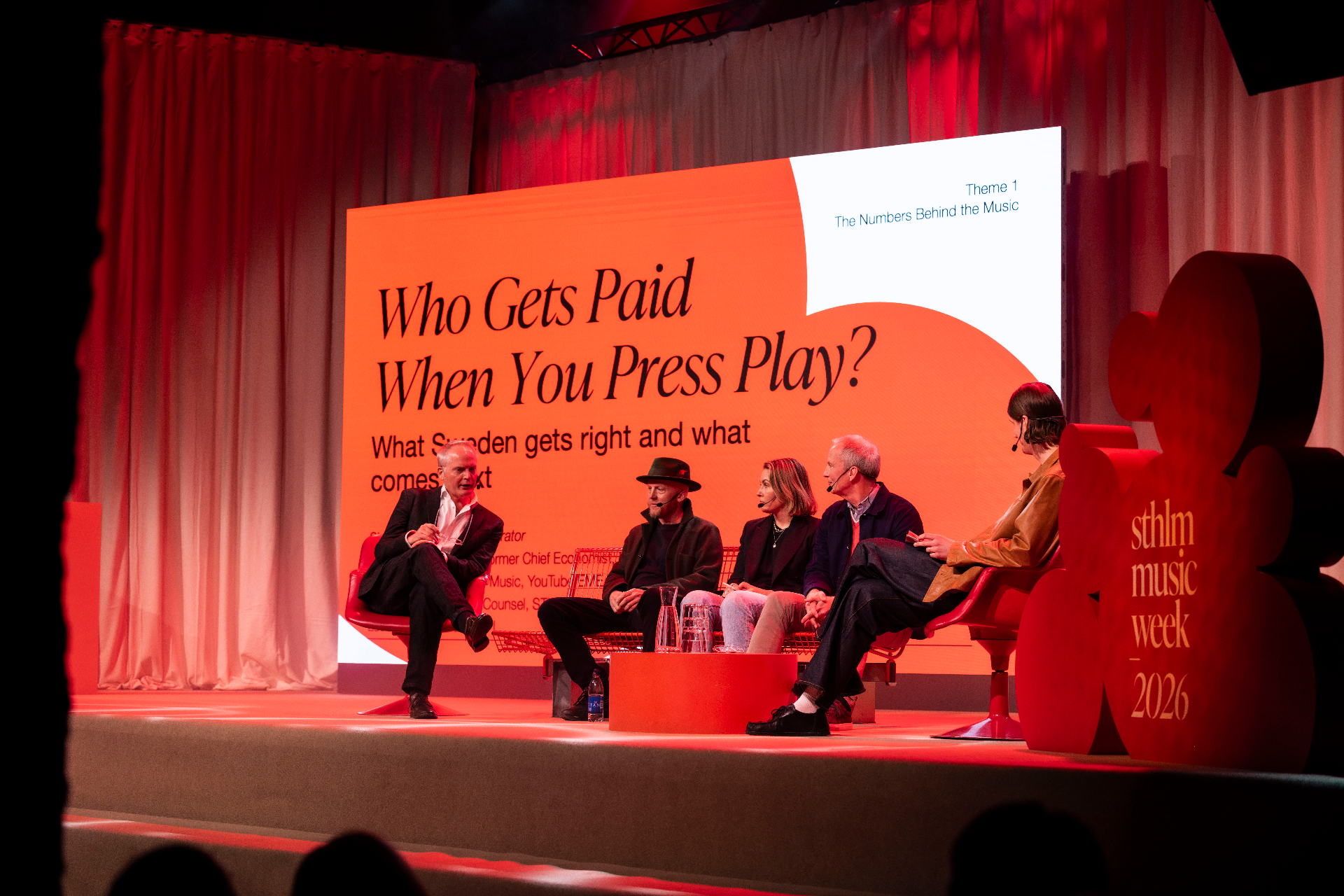
If Friday asked what is happening to music, Monday asked what it is worth, who captures it, and whether the conditions behind Sweden's position can be sustained. The Value of Music, the second of Stockholm Music Week's flagship conference days, ran four hours at Fållan in Slakthusområdet, co-produced with STIM. Over 400 decision-makers in the room. The week's strategic centre of gravity, the economic case for Swedish music laid out from data to capital to policy to the song itself.
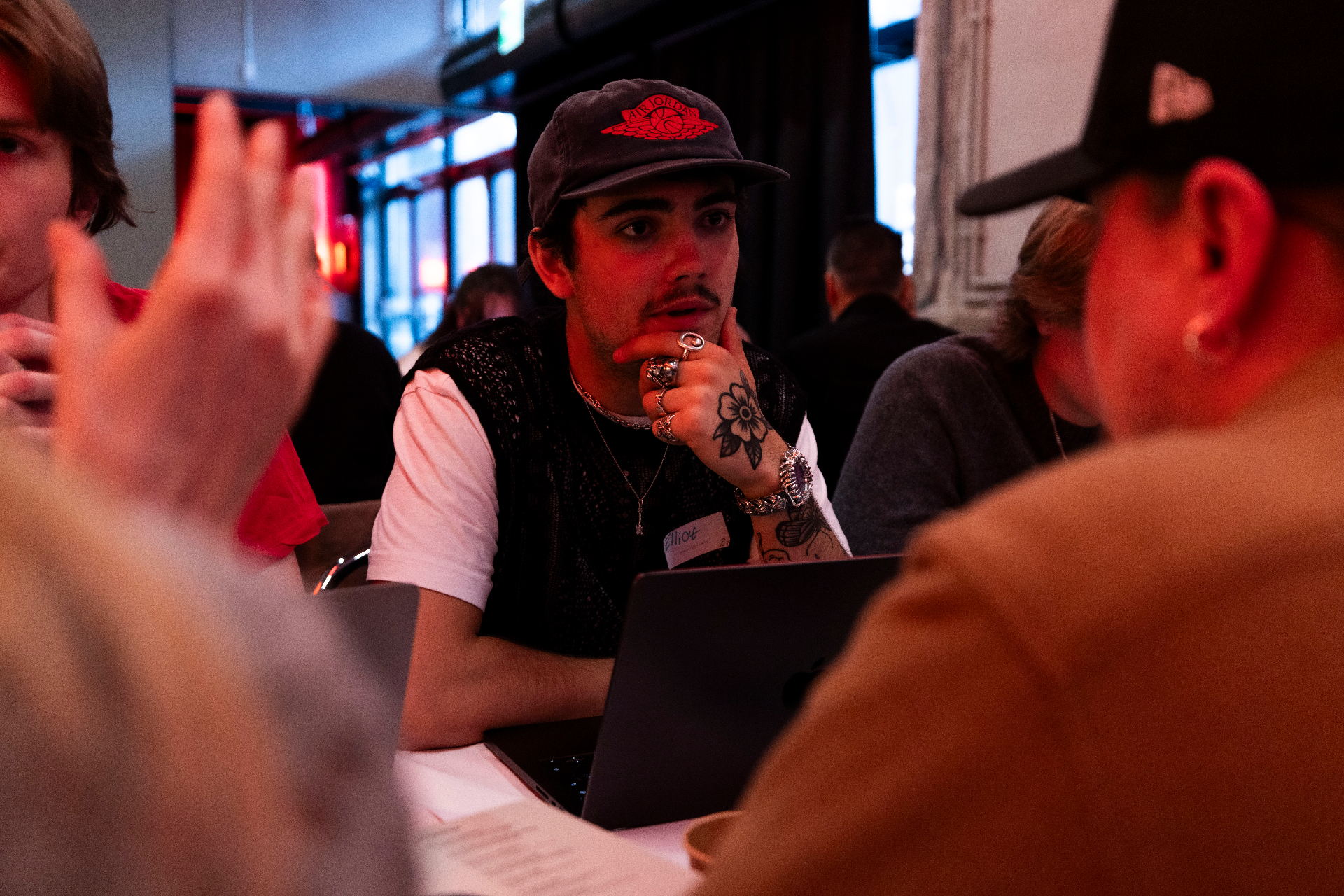
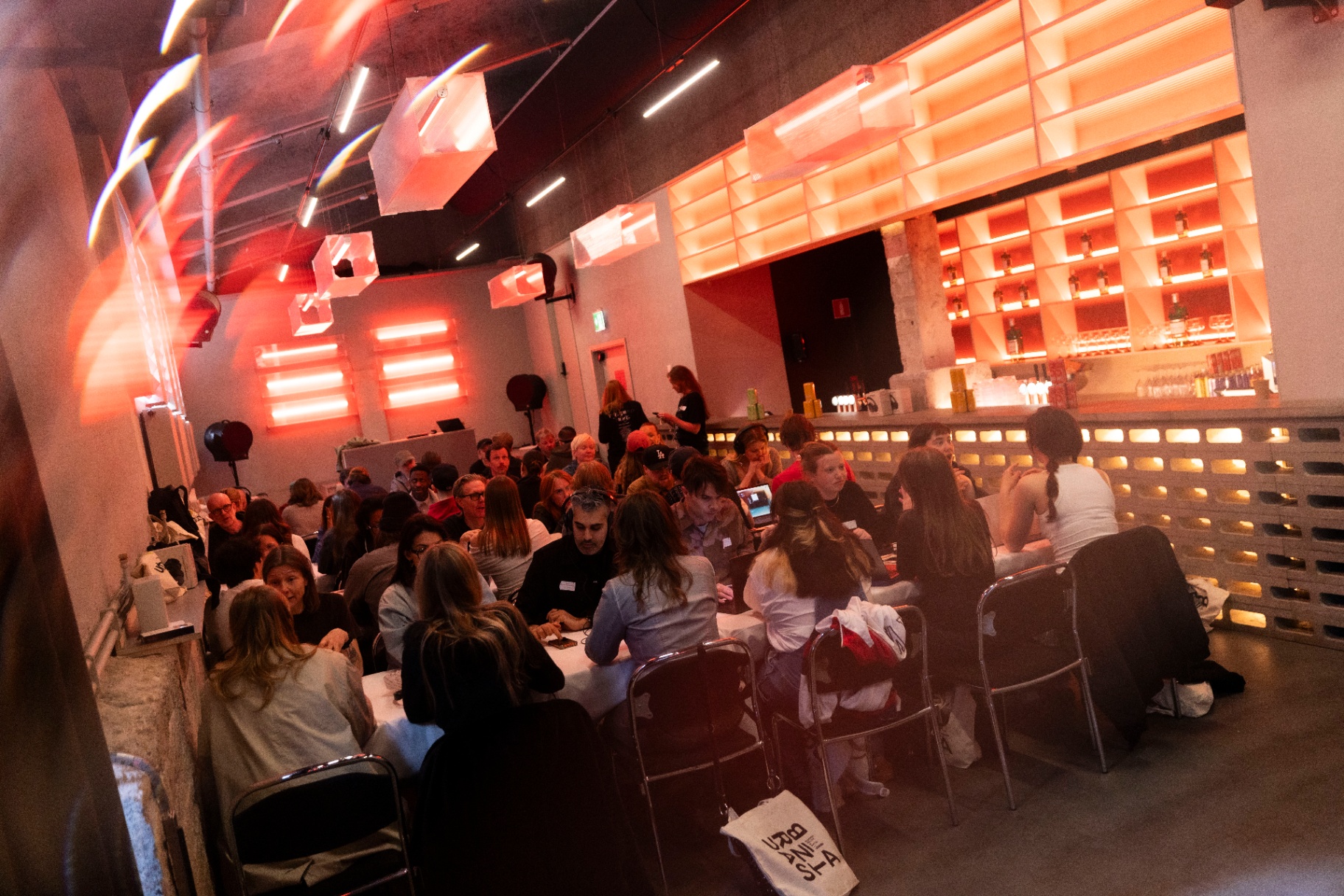
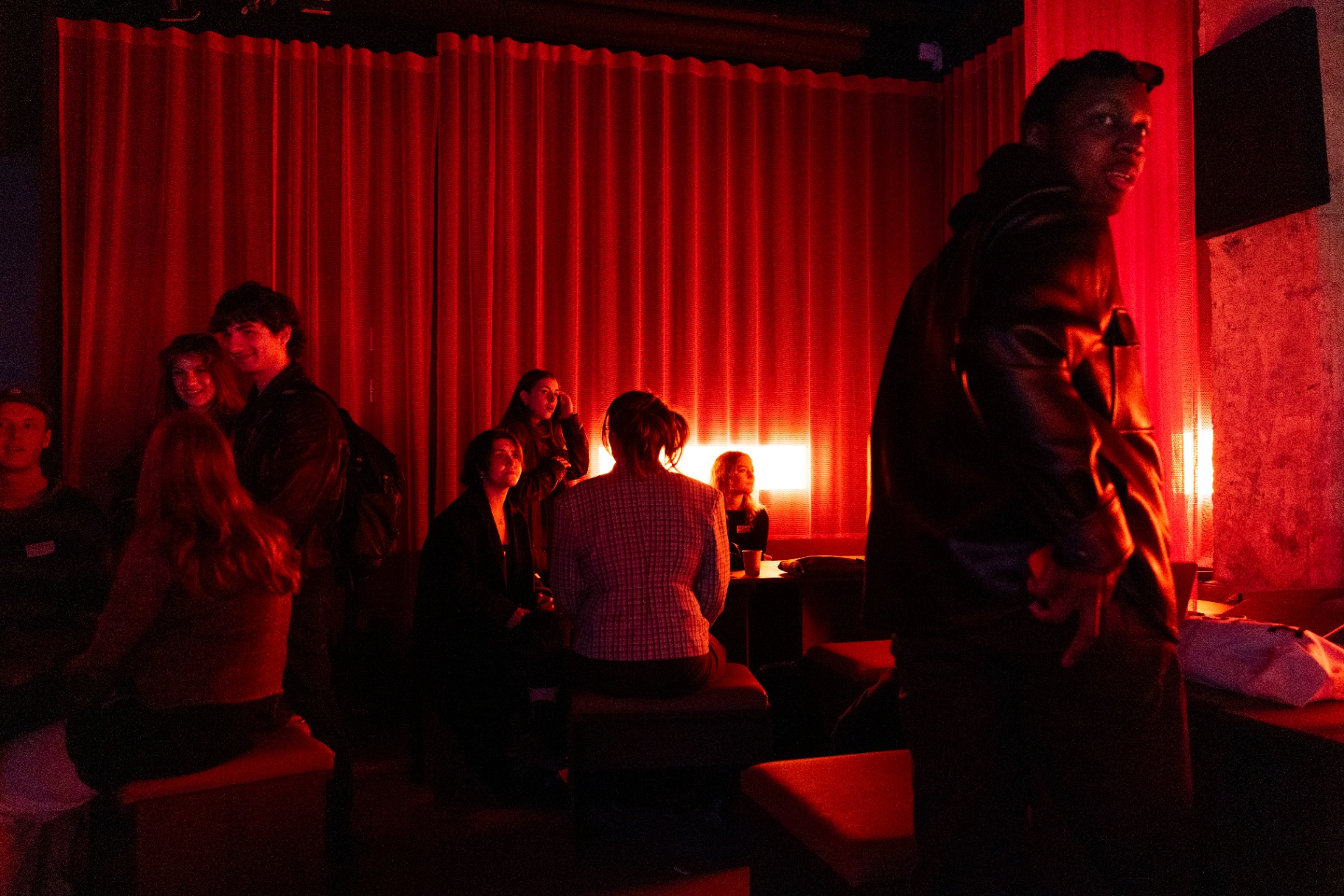
The day had started early at Lilla Fållan. The Denniz Pop Awards hosted Backstage Speed Meetings from the morning, a curated programme of one-to-one sessions pairing songwriters, producers and artists with publishing, labels, management and live. The room was full, the pairings tight, the conversations direct.
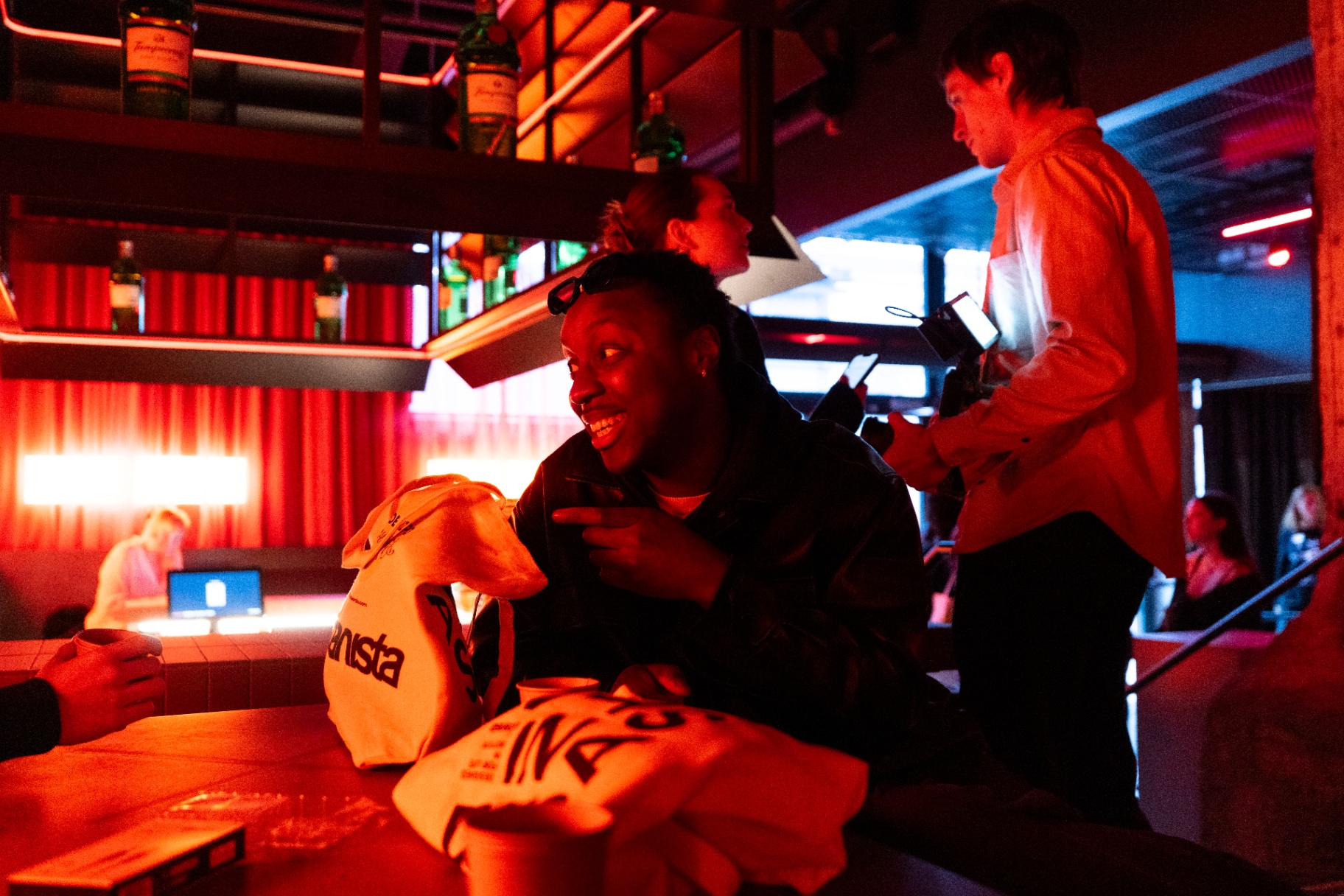
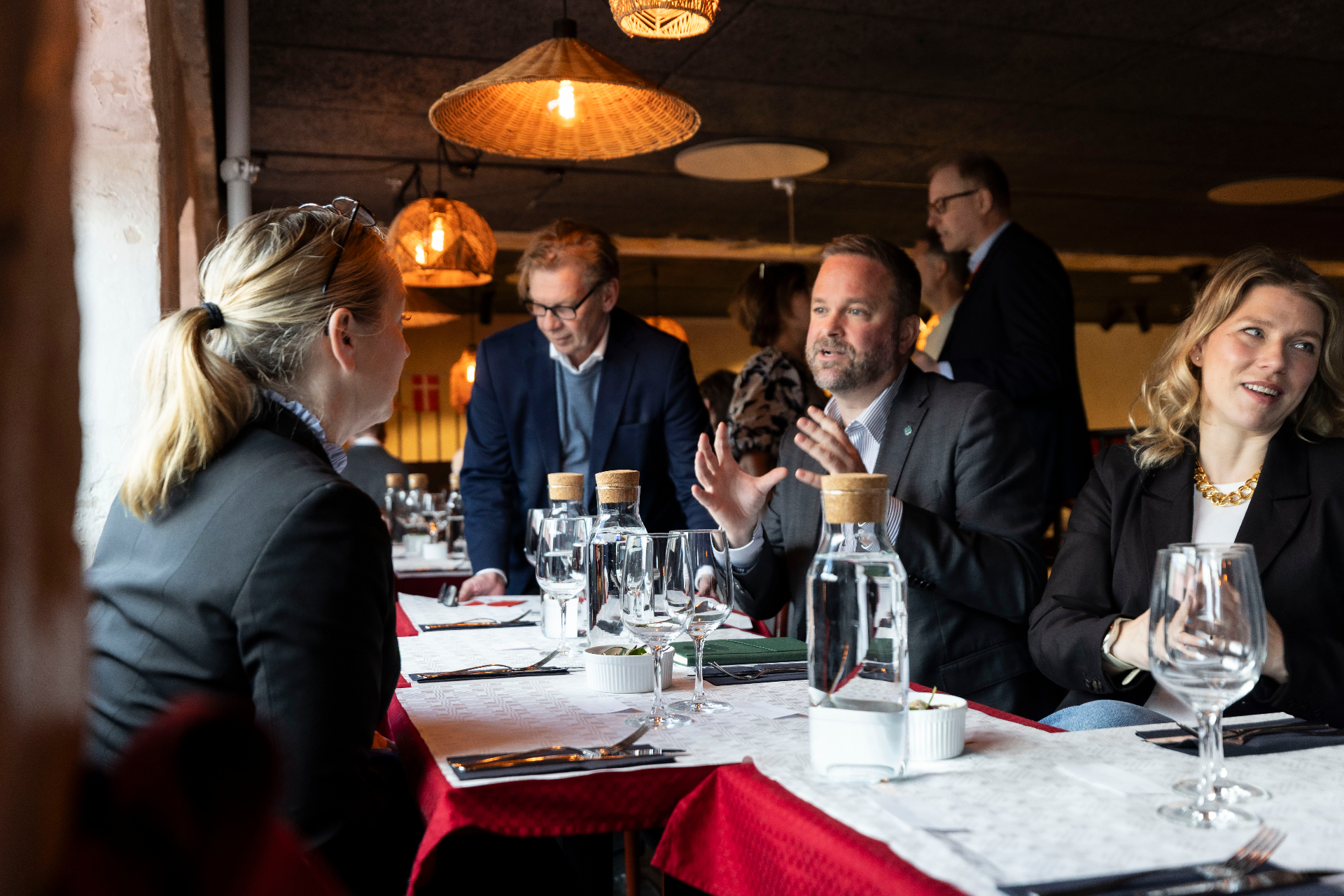
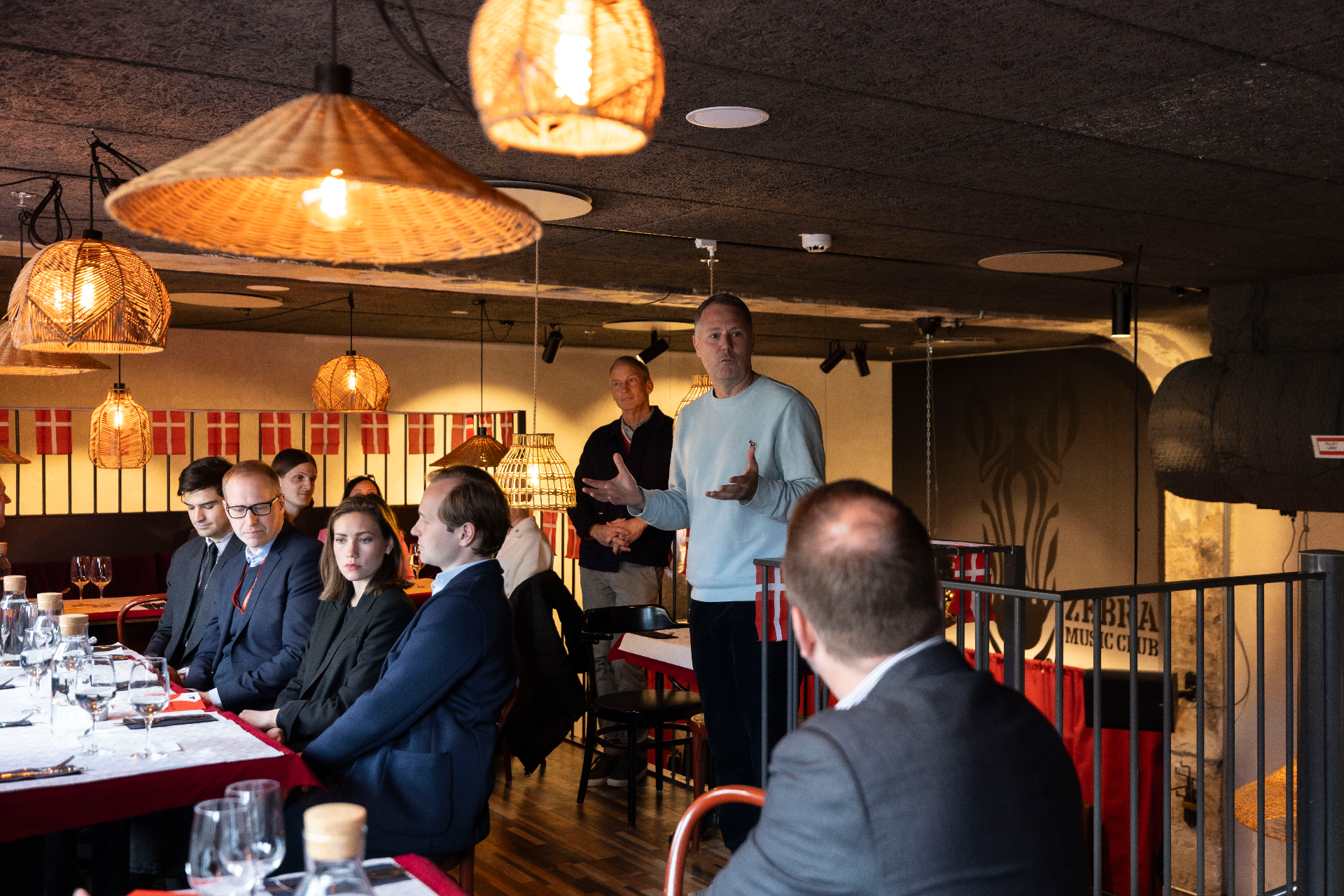
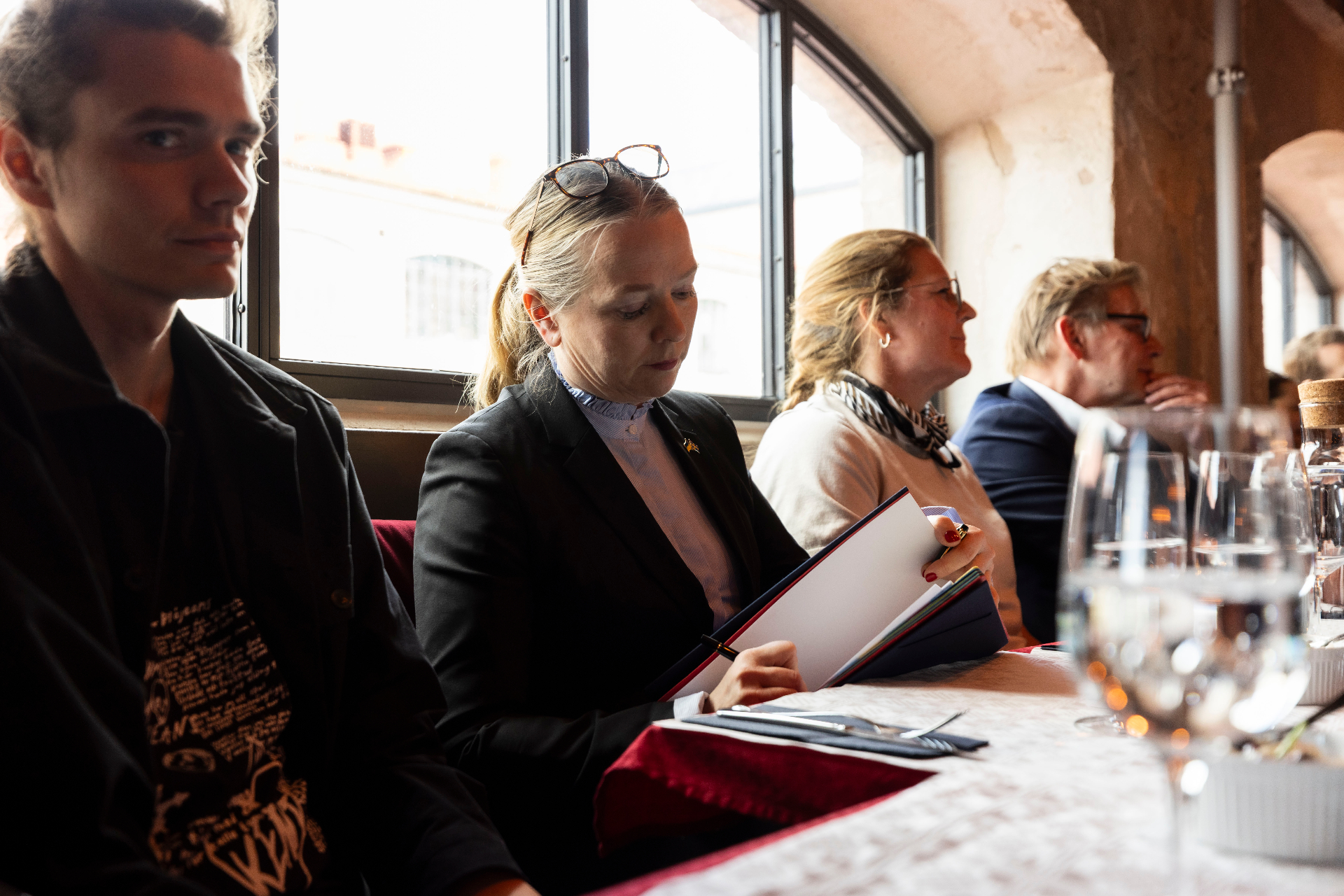
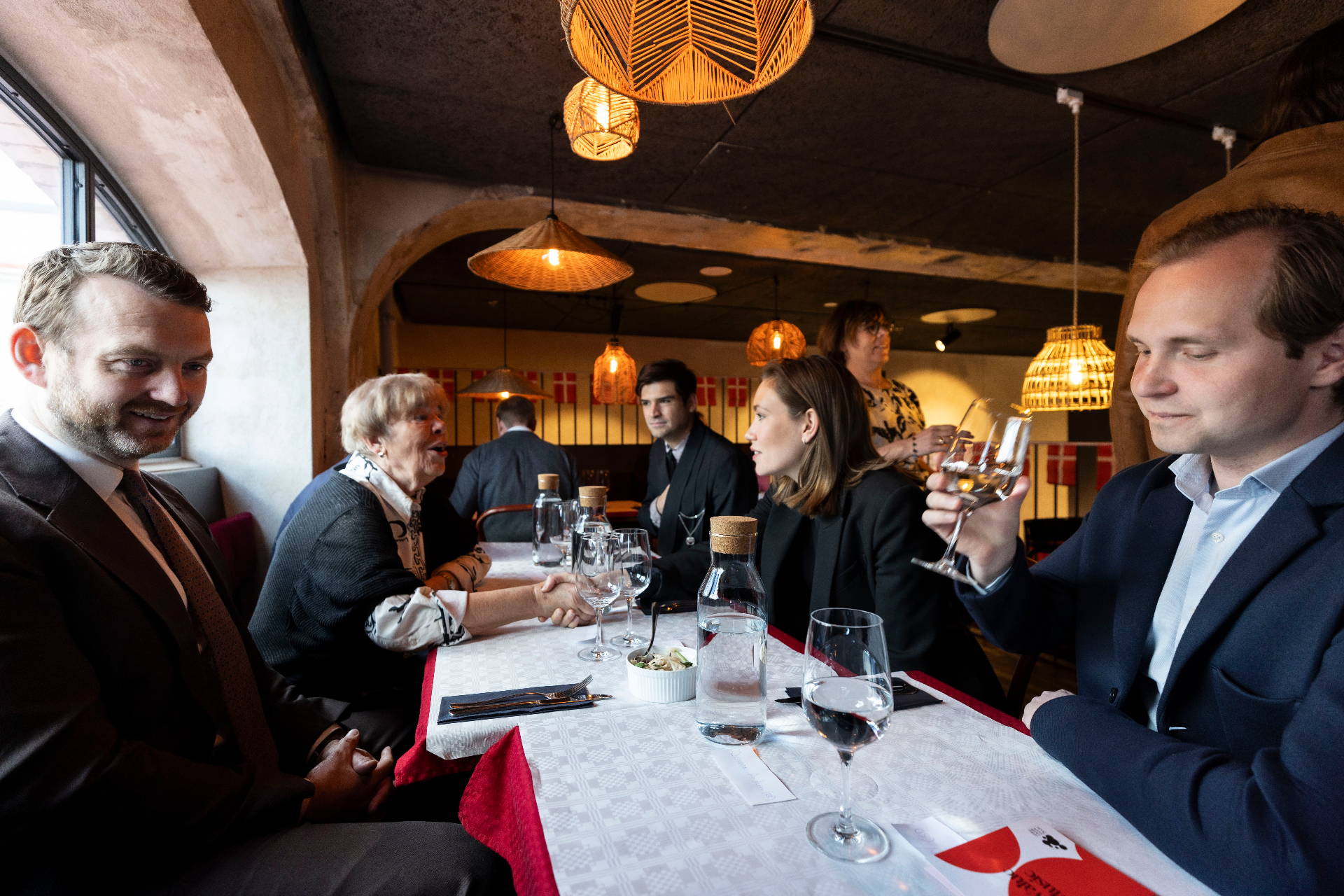
At noon on 27 April, across the street at Dansken in Slakthusområdet, IFPI Sverige, STIM, Spotify and Stockholm Music Week brought the industry together with the people who shape its political conditions. Around the table: representatives from all eight parties in the Riksdag, state secretaries, senior civil servants, and city and regional politicians. Short briefings, then conversation. What the conditions look like. What the industry needs.
The first of its kind in Stockholm, intended to return. Sweden is one of only four net music-exporting nations in the world, and the only one inside the EU. Until now, there has been no structured forum in the city for the people who built that position to sit down with the people who shape its conditions.
Karin Svanborg-Sjövall, State Secretary to Minister for Culture Parisa Liljestrand, noted that export begins at home and welcomed SMW as exactly the kind of initiative the sector has been missing, a place where the conditions for continued Swedish success can be built before they are exported. Diana Janse, State Secretary to Minister for International Development Cooperation and Foreign Trade Benjamin Dousa, emphasised that public support has to stay close to the industry it is meant to serve, designed around what the sector actually needs rather than what looks good on paper. By the end of the lunch, several participants were already asking about next year. The gap had been there. Filling it is the point.
After lunch, the room moved to Fållan. The afternoon moved through the questions in order: data, soft power, capital, infrastructure, the song.
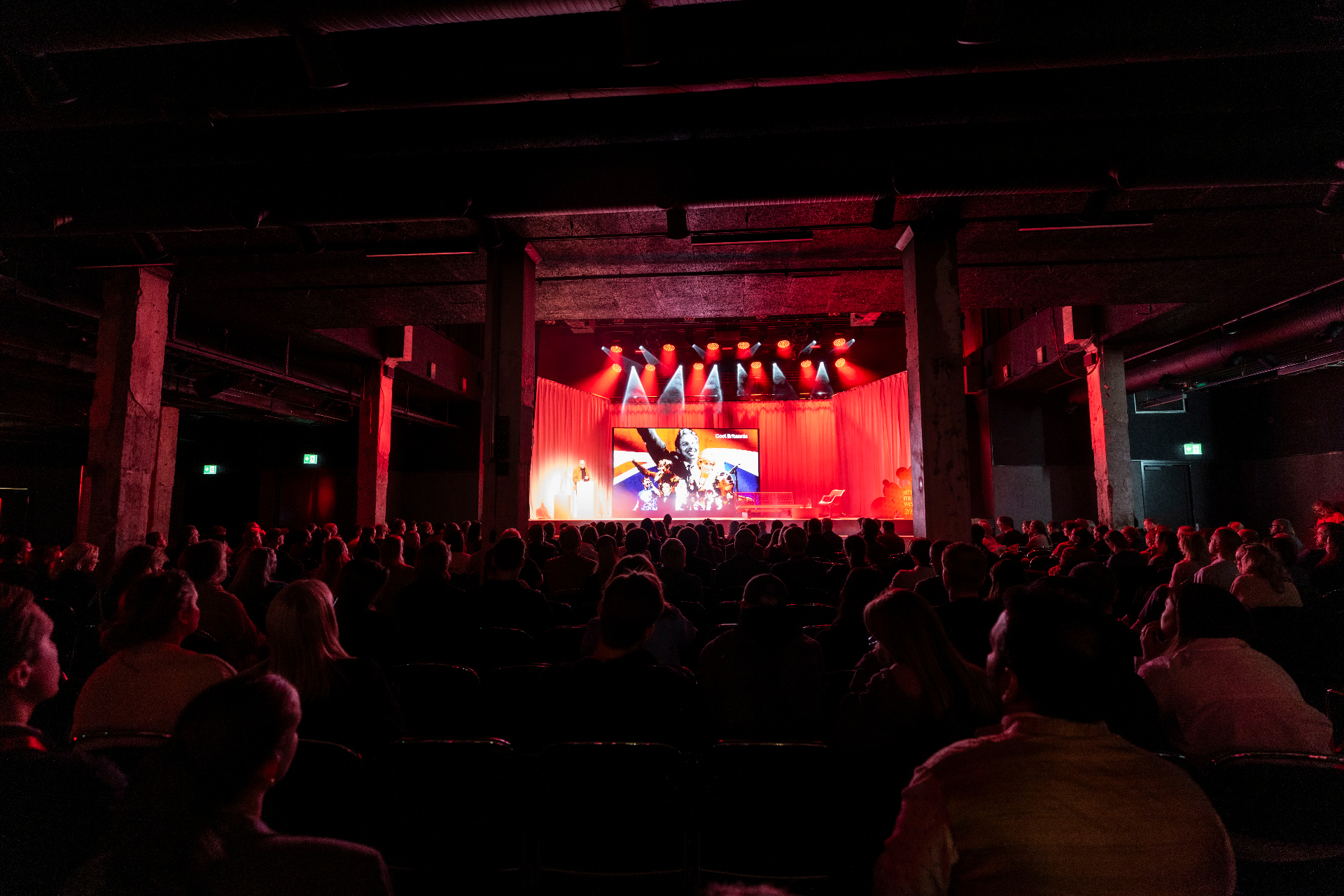
Lina Heyman of STIM opened with the origin story. It began in Almedalen the previous summer, when Johan Seidefors walked up and said the story of Swedish music export deserved a bigger stage.
Will Page, the economist behind the export report, opened with the numbers. For every krona Sweden sends abroad in music royalties, it receives 2.8 back. The highest ratio in the world. Automotive: 1.3. Steel: 1.6. Pharmaceuticals: 1.8. Music: 2.8. Only forestry beats it.
This is something we just don't do really well. This is something we do really fucking well. The challenge for policymakers is that what matters most is measured least.
Will Page, economist and former Chief Economist, Spotify
Sweden has 109,000 affiliated songwriters. Britain, with seven times the population, has 190,000. Per capita, Sweden has four times as many. Page also pointed to a newer shift: a younger cohort of Swedish songwriters, roughly half women, breaking into K-pop at scale. One playlist alone gathered 730 K-pop songs by Swedish writers, 40 hours of music, and that is just what surfaced in a single list. The royalties travel globally. A multiplier on top of an already strong export position.
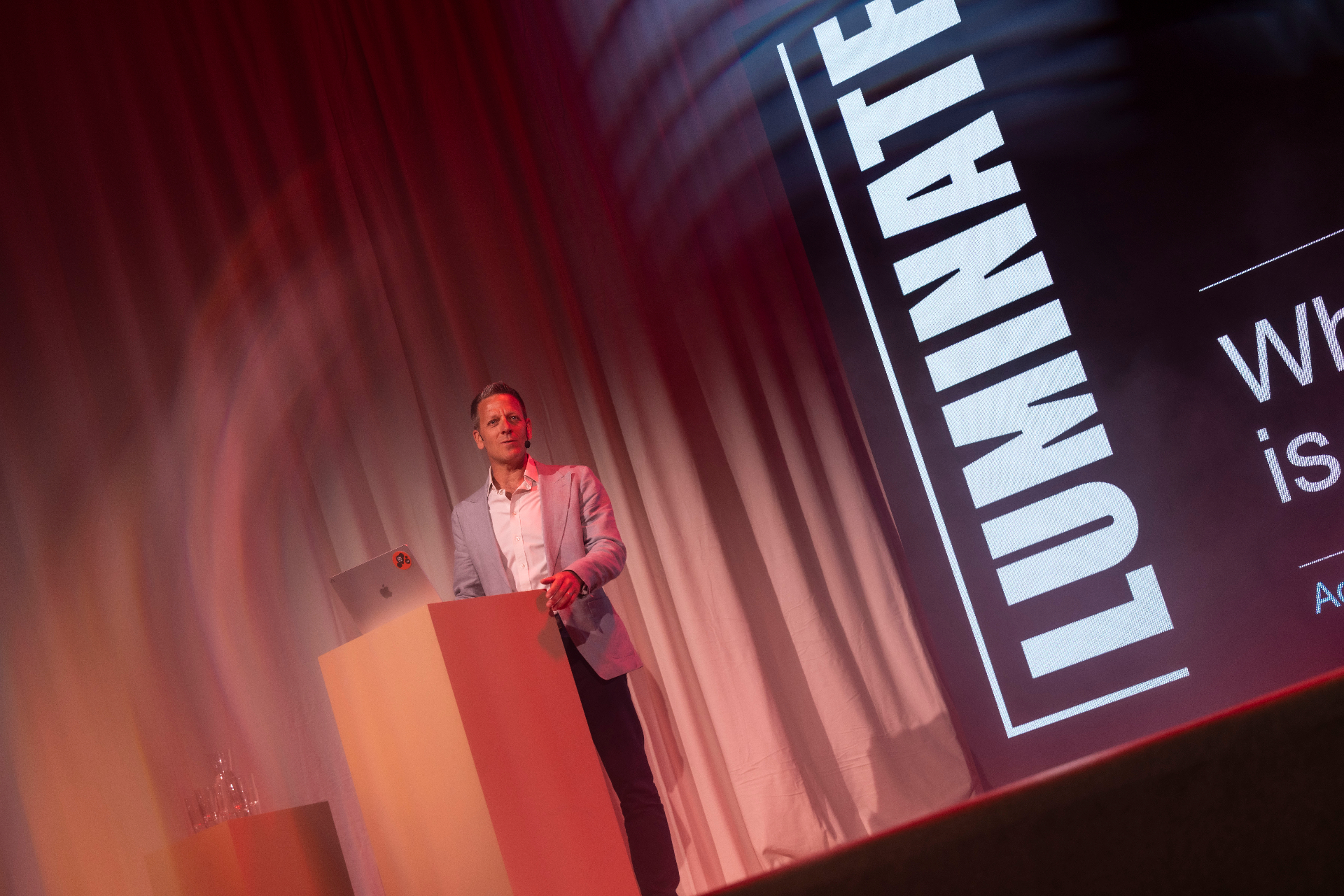
Adrian Sarosi of Luminate followed with a warning. Sweden remains a powerhouse, but listening is shifting. Swedish-language tracks fell 12.5 percentage points in share of the country’s most-streamed songs in 2025. For the first time, English dominated the charts. Korean entered the top band. Globally, growth is moving toward Latin America and Asia.
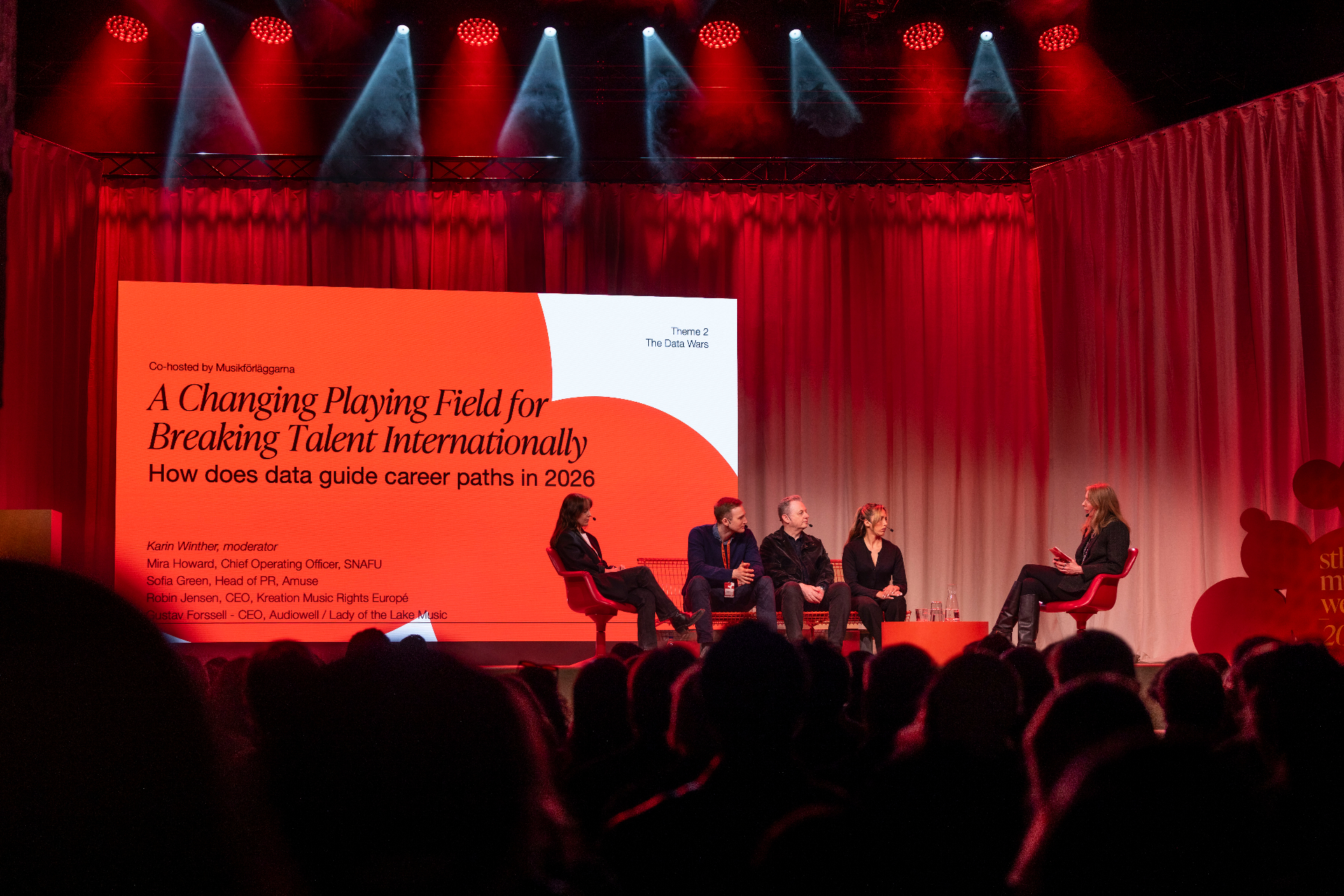
The panel that followed turned to what to do with the data now that everyone has it. Hyperlocalisation. Niche genres travelling globally through the algorithm. A streaming pyramid where the middle grows while the top concentrates. The door is open, as Robin Jenssen put it. The question is whether you walk through it.
The sharpest signal on AI came from Lina Heyman, asked where the immediate risk lies.
The biggest risk here with AI is really value leakage. There is training being done on human creation without any remuneration or without consent. If this is not corrected, we stand the risk of losing the entire music economy that is currently fuelling music creation.
Lina Heyman, General Counsel, STIM
If that is not addressed, she warned, the foundations of the current music economy are at risk. She paraphrased a line from Friday: AI is like fire. Necessary, but dangerous without guardrails.
From there, the conversation turned outward.
Karin Winther sat down with Jin Suk Choi, part of the Seoul delegation, on what Sweden and South Korea can learn from each other. Widely known under his moniker JINBYJIN, Choi is one of the key behind-the-scenes architects of modern K-pop, a songwriter, producer and global A&R thinker whose fingerprints can be found across the genre's sound and its business logic. His metaphor stayed with the room.
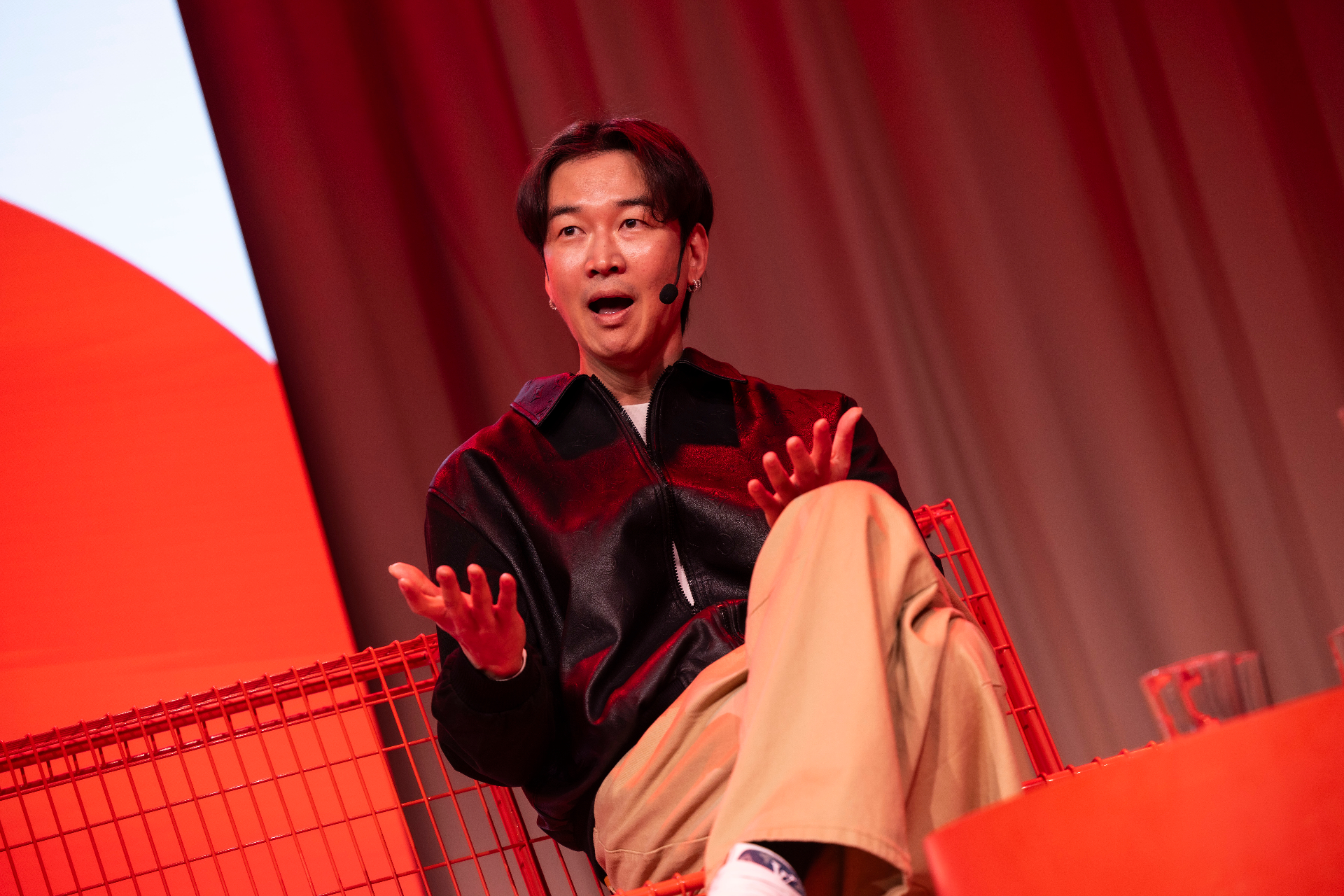
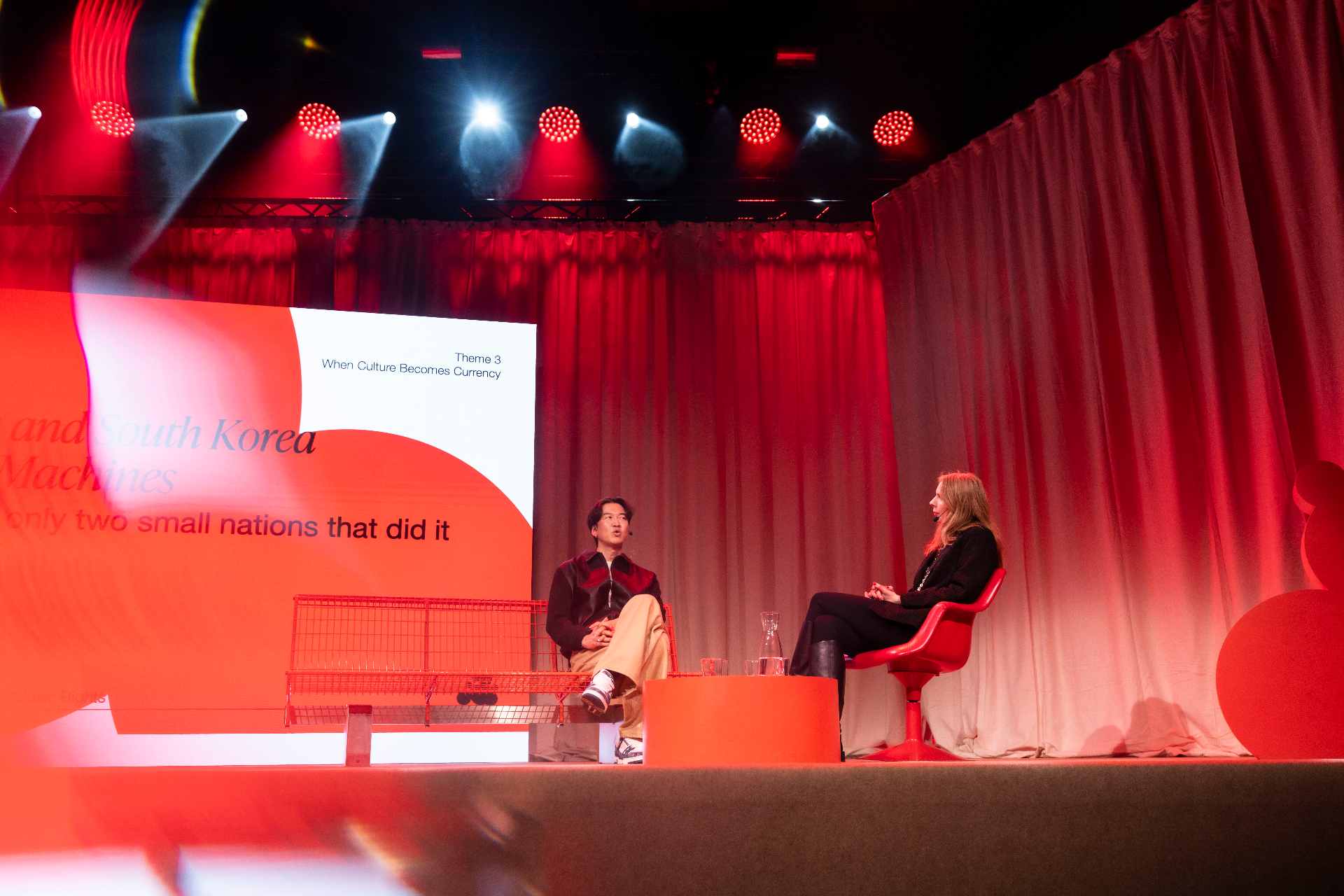
When you want to catch the butterfly, you don't just catch the butterfly. You build a garden. The butterfly may not come this spring. That is fine, because you can enjoy the garden. We have to be patient enough to nurture the community. Without the community, there is no creativity.
Jin Suk Choi, Kreation Music Rights
Martin Gelin, journalist and author of Mjuk makt, picked up the garden and built the political case beneath it. Soft power has shifted. In the 1990s it was trade, tourism, branding. Cool Britannia. The Bilbao Effect. Now, he argued, it is democratic resilience. And the world has divided.
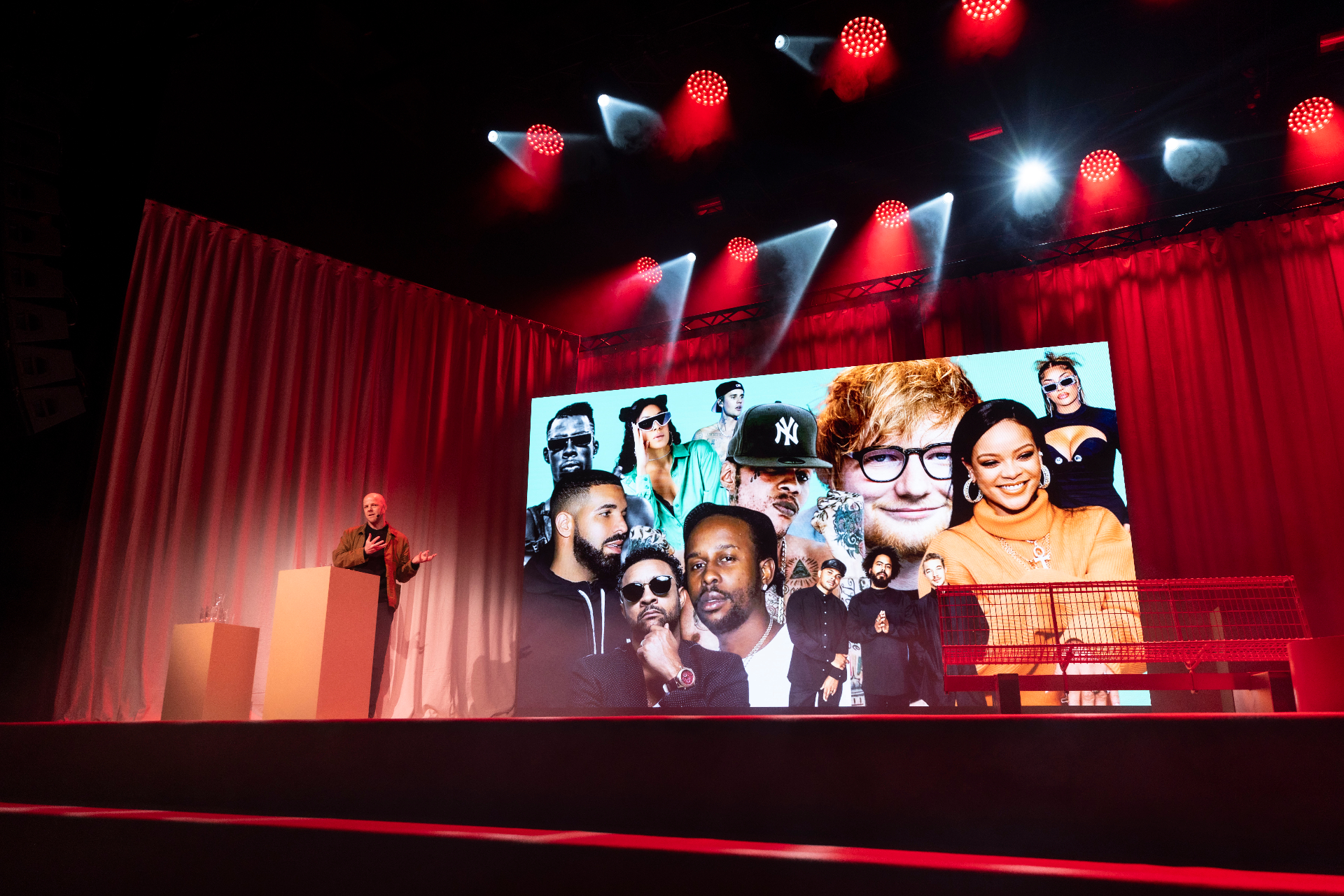
Repressive, authoritarian countries are spending historic sums on soft power. China spends more than any country on earth. Saudi Arabia is building 300 museums in NEOM. These things are happening in repressive, authoritarian countries. They are not really happening in open democracies.
Martin Gelin, journalist and author
The exceptions among open democracies, he noted, are the younger ones: South Korea, the Baltic states, Ukraine. Countries that know democracy cannot be taken for granted.
The Sweden side of the equation came in the panel that followed, moderated by Casper T. Schaber with Anna Rudels of the Swedish Institute and Jesper Thorsson of Export Music Sweden. The number that landed: Sweden's annual public investment in music export support is 0.39 kronor per citizen per year. Export Music Sweden remains the least-funded export office in the Nordic region, behind even Iceland.
Money is shifted from humanities, science, art, to military armament. I think that is a very dangerous, zero-sum game.
Martin Gelin, journalist and author
We have a hidden gem. We need a strategic narrative about Sweden today, not only the legacy.
Anna Rudels, Deputy Director General, Swedish Institute
From public capital to private. Jakob Edström of Ström chaired Johan Lagerlöf of Pophouse and Willard Ahdritz, founder of Kobalt and now of Audits & Co, on why investors are betting billions on music. The asset class has matured. Subscription revenues delivered the predictable returns funds wanted. The next chapter, Lagerlöf argued, belongs to active investment that drives growth, not passive royalty harvesting. Ahdritz framed the broader Swedish opportunity bluntly: a country that produced one global music company in Spotify has the conditions to produce more.
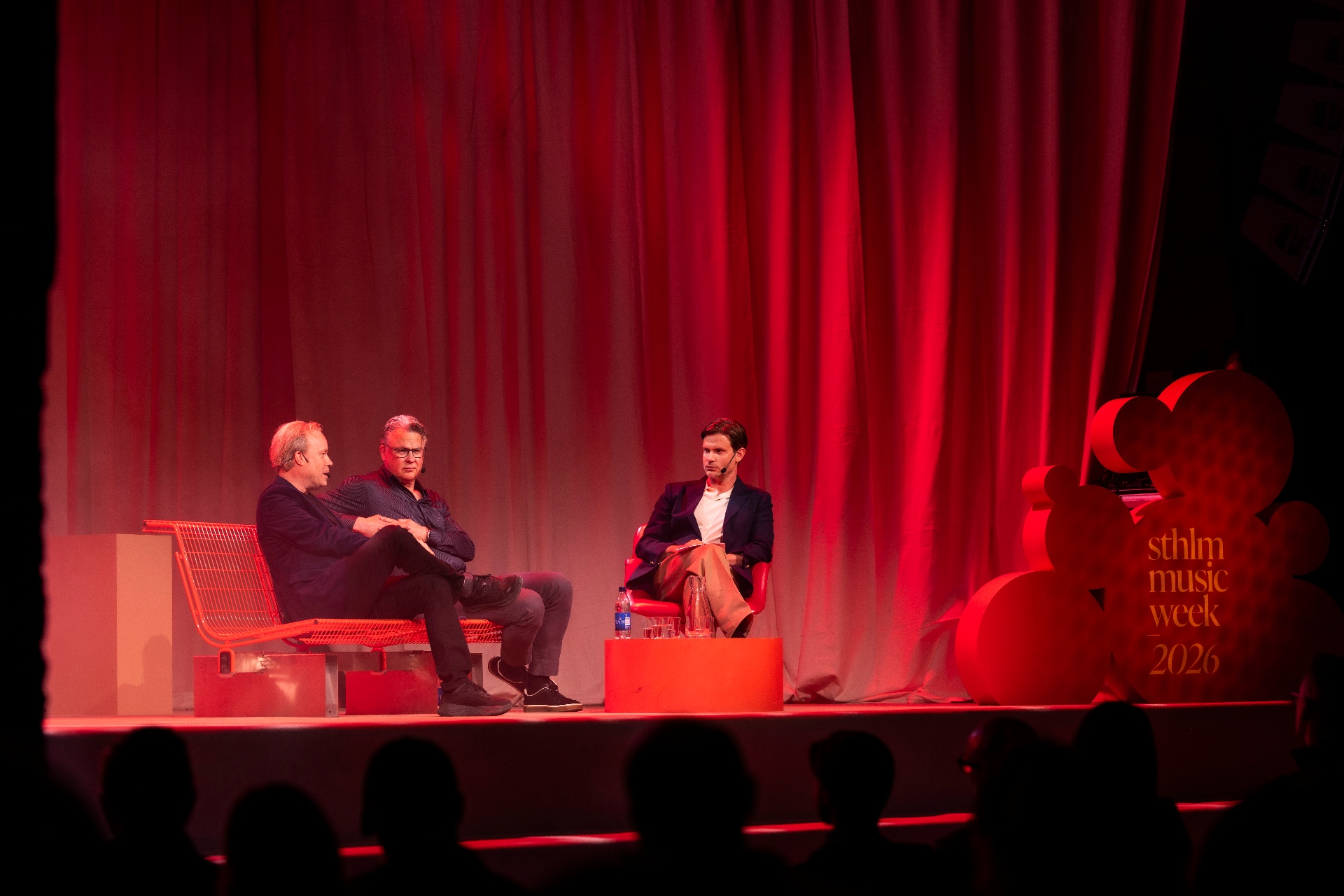
Spotify counts once in a while, but we need to build two or three more. That can happen.
Willard Ahdritz, founder, Kobalt
Then the question landed where it always does: infrastructure. Schaber moderated Caroline Strand of Stockholm Business Region, Linus Kjellberg of Atrium Ljungberg, Marie Lindqvist of Legends Global and Klas Bergling of the Tim Bergling Foundation on what Stockholm needs to remain a world-class music city. Lindqvist brought numbers from the Goosebumps Effect report, recently published by Stockholm Live: 89 percent of Swedes believe live experiences can strengthen togetherness in turbulent times, 74 percent feel more hopeful after sharing one. Bergling, from the foundation that bears his son's name, was the most direct.
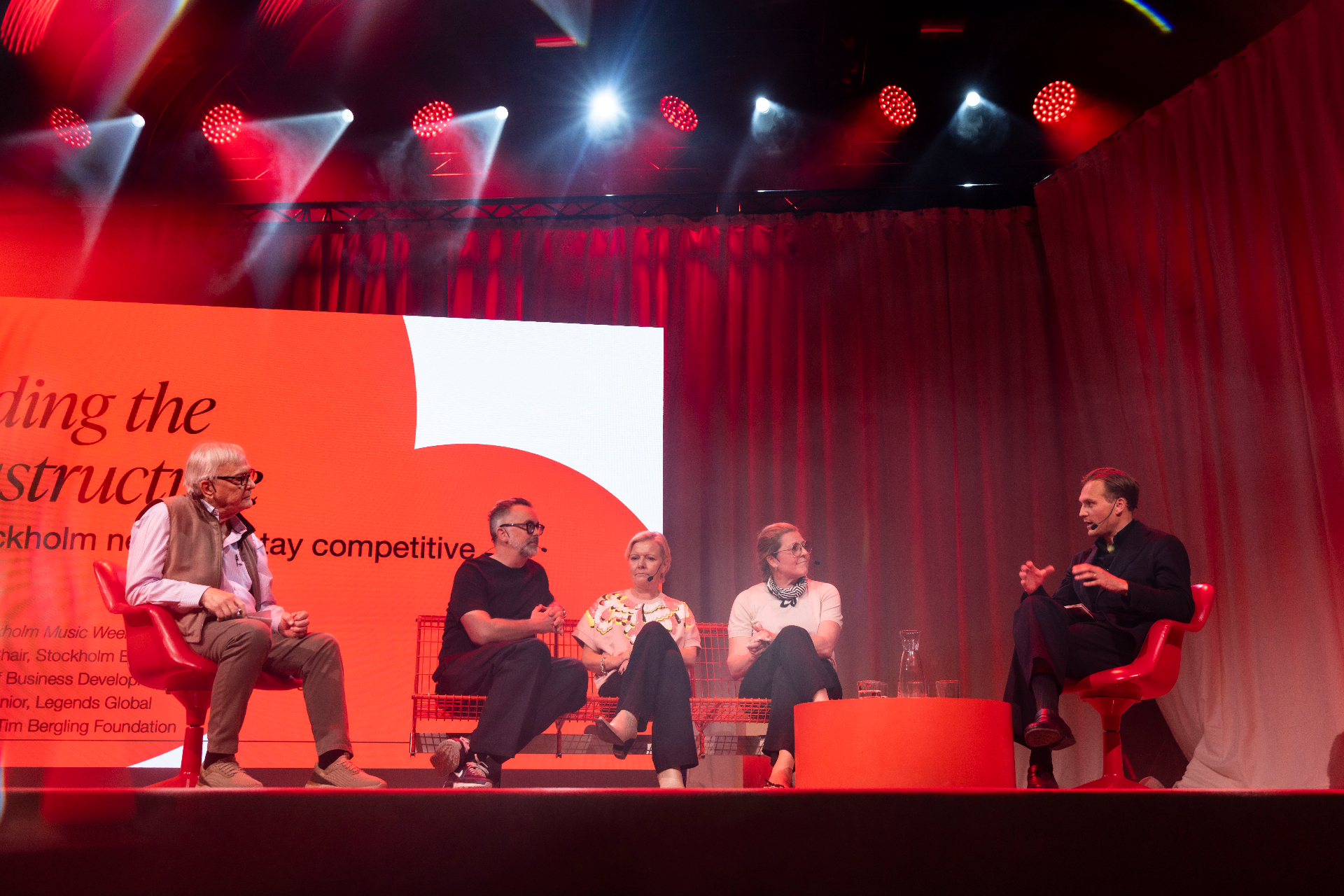
Music is the door opener to your heart, and it is also the door opener to young people's hearts. We need places that are safe. We need to cooperate with organisations and government. It is easy to say, very hard to do.
Klas Bergling, founder, Tim Bergling Foundation
The day closed where it had to: with the songwriters. Sarah Dawn Finer hosted Ylva Dimberg, Oscar Görres and Alexander Kronlund, three generations from the Cheiron era to today's K-pop rooms, on what it actually means to write a hit in 2026. Dimberg, who has written for NewJeans and others, on what makes the Swedish songwriter travel: not that demanding, deliver on time, respect the people they work with. Görres on the unteachable instinct: to see magic where other people hear noise.
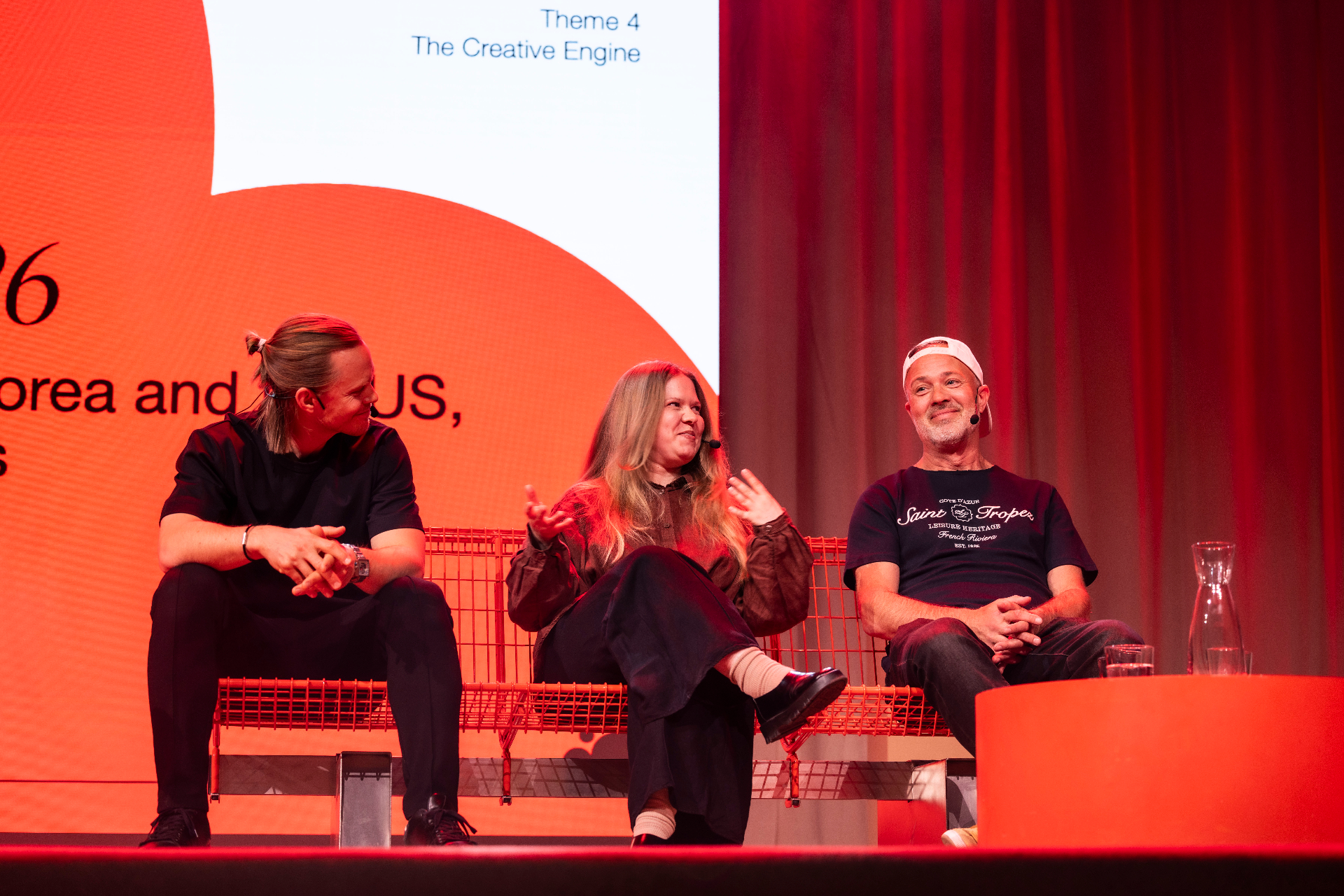
Kronlund's closing line, after hours of data and policy and capital, was the one to take home.
Let's not lose actual humans in the process of making music. At least for now, humans create music in a way that still has changed the world, and will continue to change the world.
Alexander Kronlund, songwriter
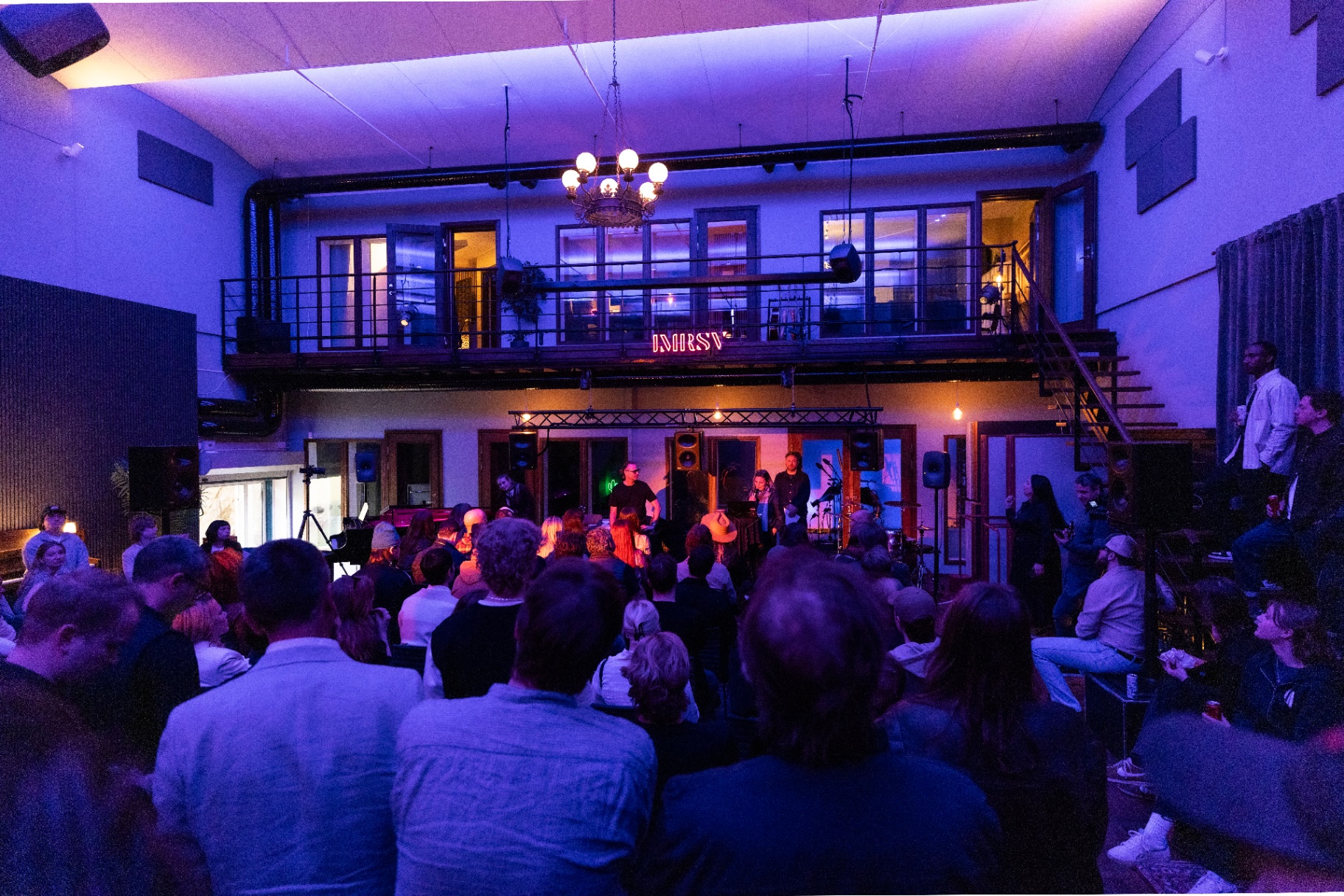
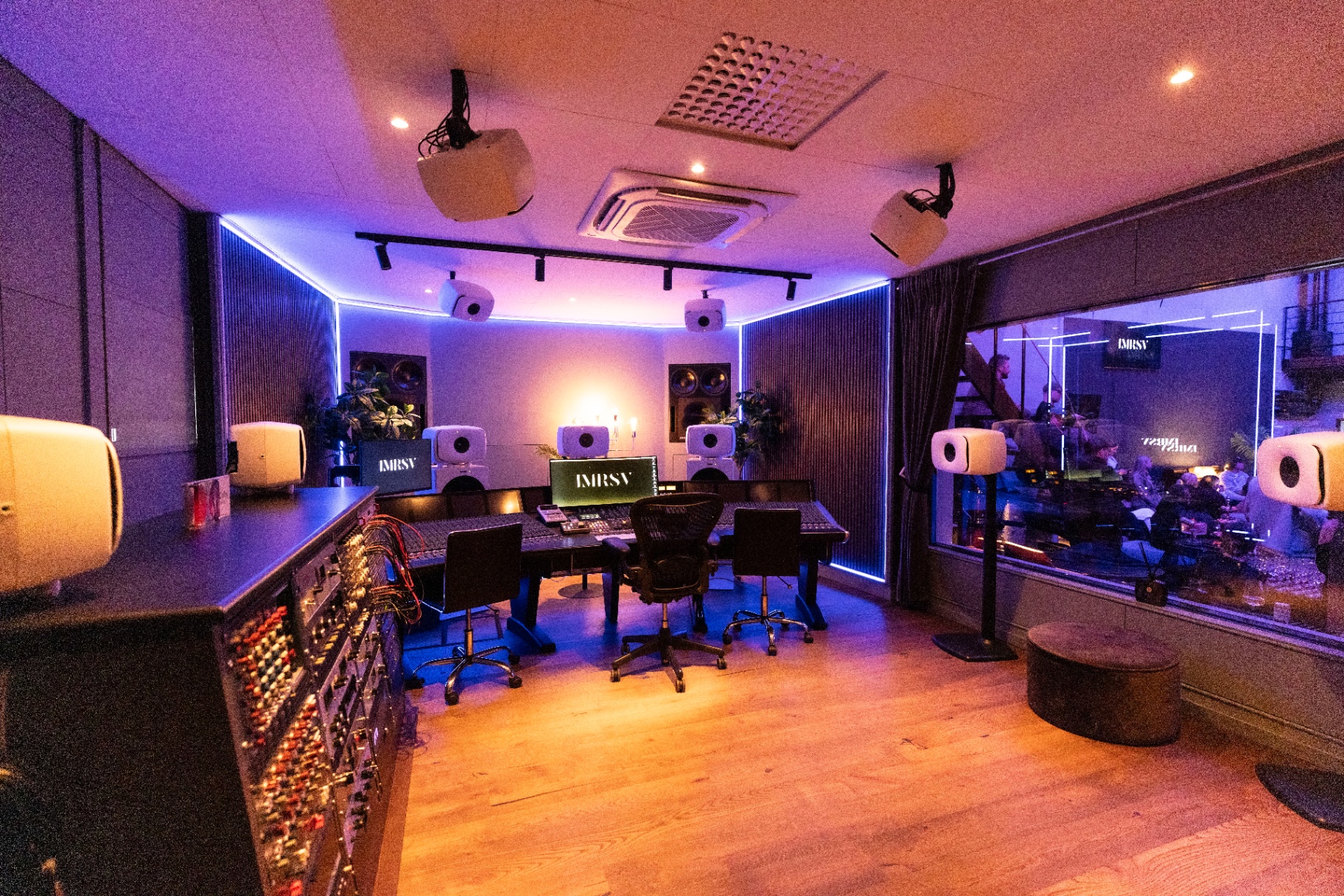
The evening rounded off at IMRSV Studios, where Dolby House opened its doors. Full house. A Dolby Atmos listening session built around music from Avicii and GERD, with Klas Bergling and GERD herself in conversation about Avicii's musical journey and GERD's path as an emerging artist. Two ends of the Swedish music story, decades apart, in the same room on the same speakers.
The most important thing would have been getting closer to the listener. That was always what mattered most to him.
Klas Bergling, on what Dolby Atmos would have meant to Avicii
Five days in.