Future of Music
Questions for the Unheard
By Friday, the week stopped presenting and started thinking out loud. Future of Music, Stockholm Music Week's flagship programme, unfolded over four and a half hours at the Stockholm School of Economics, co-produced with the SSE House of Innovation. Björn Ulvaeus and Google DeepMind. YouTube, Universal, Dolby, Epidemic Sound, STIM. Artists, founders and policymakers, guests from Seoul and New York seated next to much of the Swedish music industry. A wider system, fully in the room.
The question that held the day was as obvious as it was unresolved. What happens next, and which questions to ask when the answers have not arrived yet.
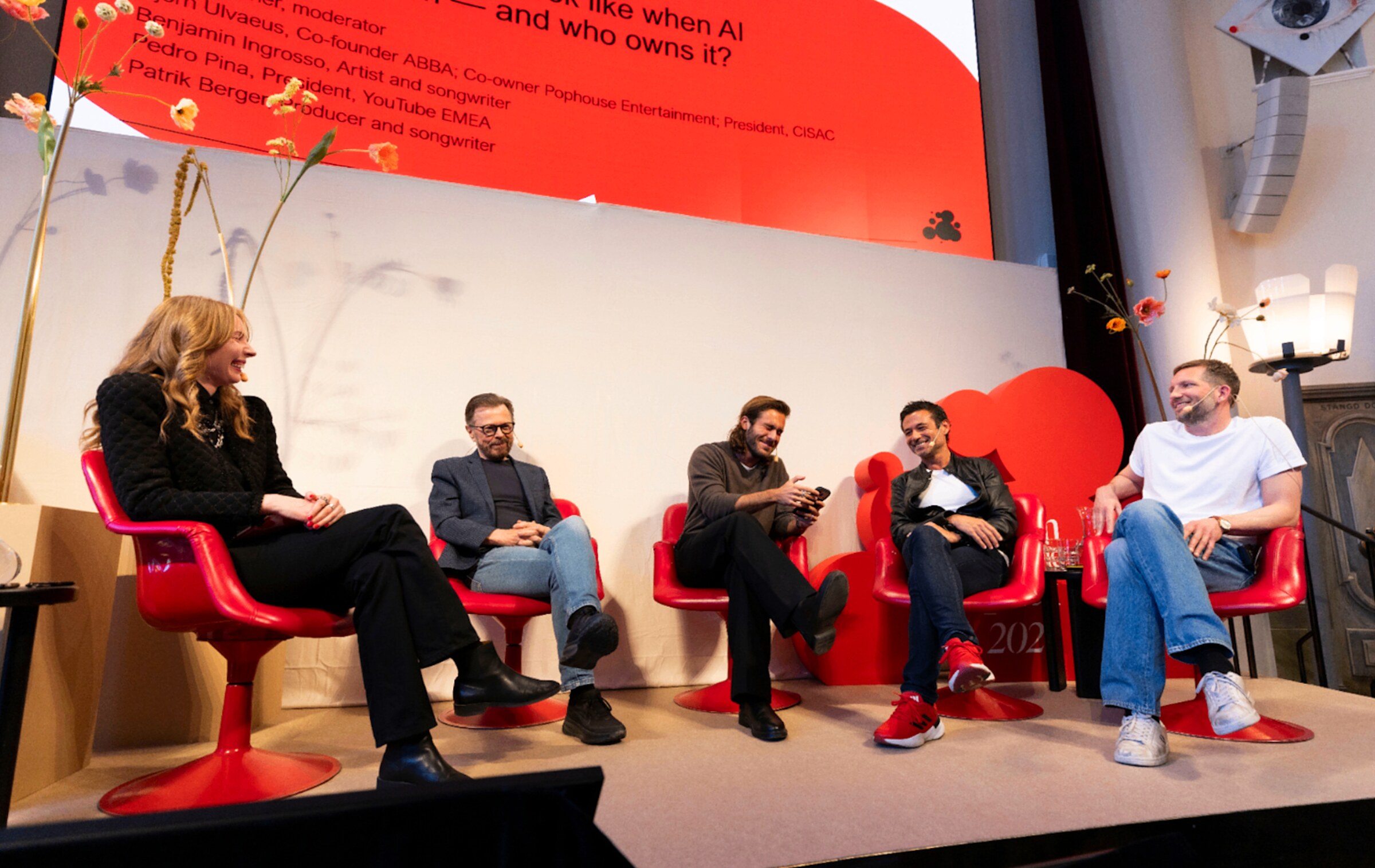
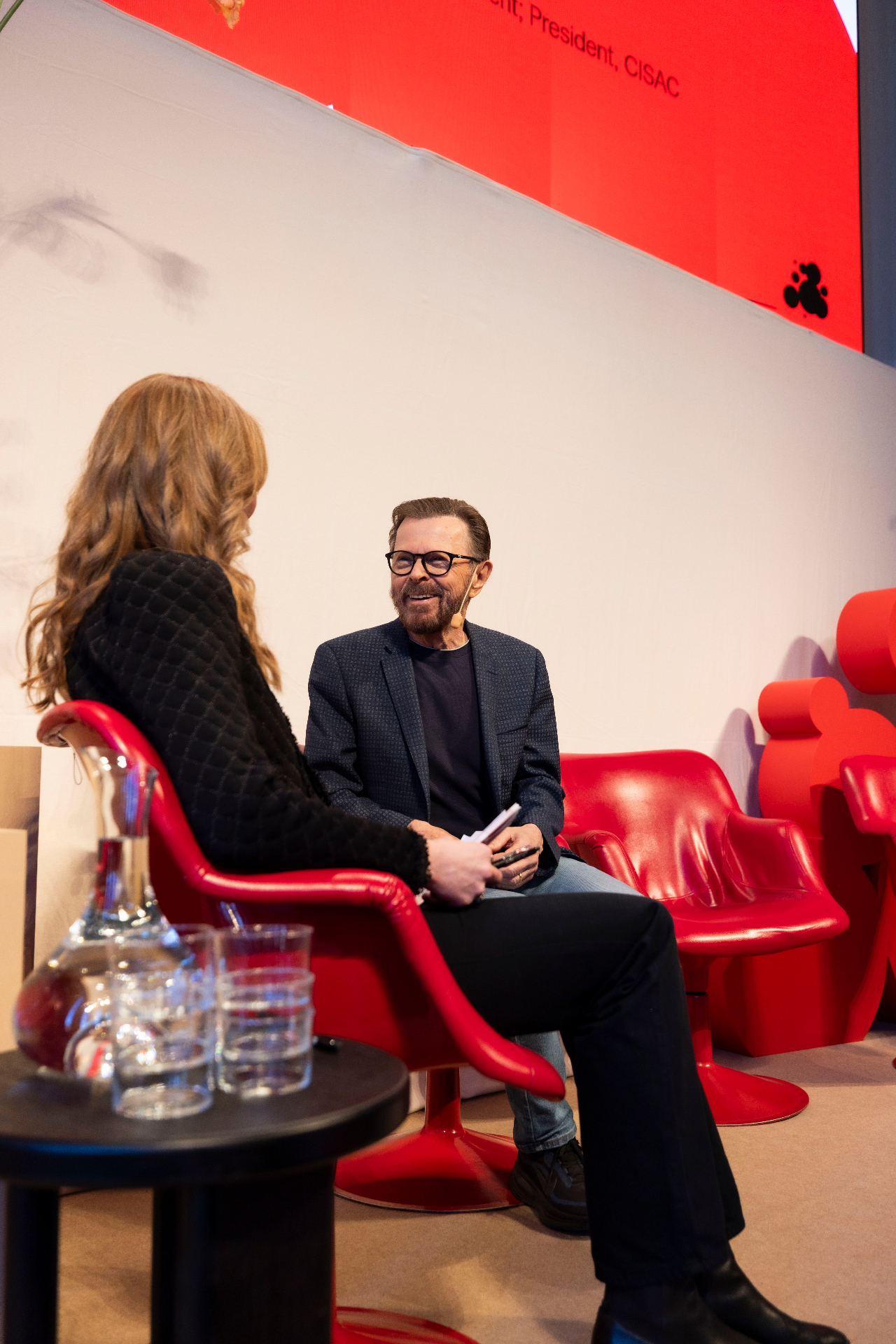
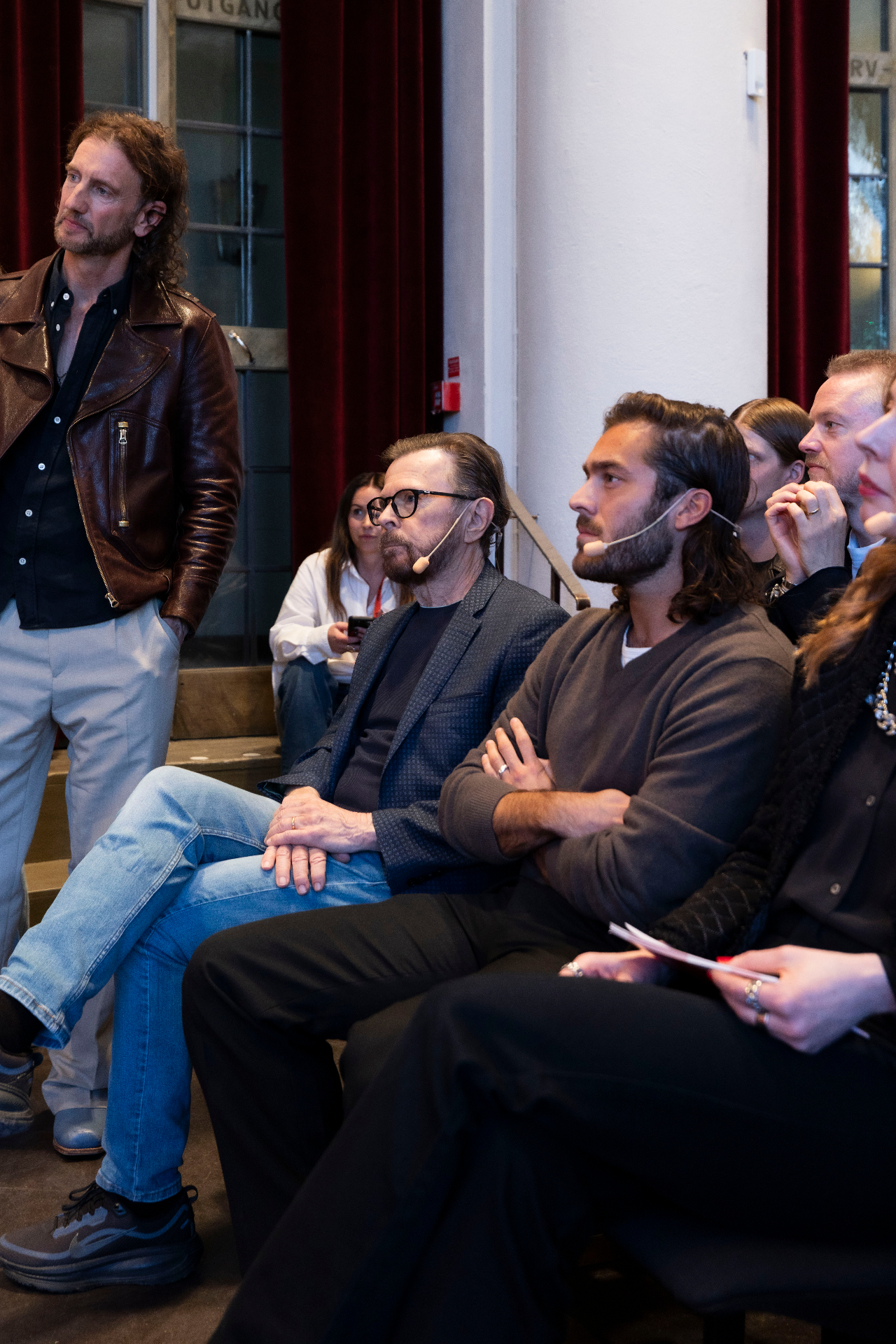
Björn Ulvaeus, Benjamin Ingrosso, YouTube's Pedro Pina and songwriter Patrik Berger. Four generations in one exchange. Ulvaeus called the moment a tectonic shift and placed AI in a lineage from synths to drum machines, technologies that were resisted and then quietly became irreversible. The continuity did not soften his position on rights.
These AI music generators train on human-made, copyrighted material. They have to pay for that. Right now, it is lawless territory.
Björn Ulvaeus
What unified the panel was a condition. The human stays the editor, the one who chooses. As long as the human is the director, Ulvaeus argued, the outcome is still human. Pina, speaking from a platform with two billion daily users, put it shorter: if humans are not in command, it is just mediocre.
Ingrosso tested the boundary live. He played a demo he had written at the piano at home, then a version he had prompted an AI to rework in minor. The second one, he admitted, was better. The room laughed.
The point of the demo was that he had still been the one in the room. The panel kept circling back to the same line, that AI is a tool and the human is the one who recognises the golden nugget, who hears which version is better and why, who knows what to keep and what to push further with the next prompt. Every adjustment the model makes asks for another adjustment from a person who understands the song. A co-creator, fully in the loop.
I've tried to ask them to write me lyrics and they suck. Thank God. It's the most generic shit ever. AI doesn't have a personal life.
Benjamin Ingrosso
Berger, the Swedish songwriter behind Robyn's "Dancing On My Own", Icona Pop's "I Love It" and cuts for Charli XCX and Lana Del Rey, has spent two decades on the writing side of every technology shift the room was now debating. Asked where he stood on AI, he closed the sequence with the image that stayed through the break, a reminder that the tool itself is neither the threat nor the answer.
This whole question is a little bit like asking whether you are for or against fire.
Patrik Berger
The second half of the afternoon shifted from creation to the system around it. Joakim Johansson of Universal described an industry still organised in silos around the same artist-fan relationship. Breaking an artist today, he said, is about getting an entire fragmented chain of expertise to work together, well beyond the release of a great song.
The underlying test, as he framed it, is simple. What keeps him awake at night is whether the industry actually adds value, because if it does not, it should not be in the way.
The question extended into experience itself. Per Sundin and Ludvig Andersson, reflecting on ABBA Voyage and what follows, resisted the idea of a replicable format. Andersson was direct: ABBA Voyage is one specific thing, and what matters is older than the technology. The baseline, as he put it, has to be how to reach the human soul.
A conversation on immersive audio, Karin Winther with Magnus Mähring of the SSE House of Innovation and Tim Pryde of Dolby, picked up the same thread from the listening side. Mähring noted that music, as a field of academic study, is strikingly underexplored compared to film or design, even though it moves more people, more often, than almost any other cultural form. Pryde took it from there: immersive audio is closer to where listening is heading, a format that gives the song room to breathe and the listener a place inside it.
Sundin, already moving toward his next production, a Kiss show for 2028, was less precious about where that can go. Asked what it might look like next to ABBA Voyage, he answered in the language of Kiss.
If ABBA is a concert, the Kiss show will move through different worlds. Epic proportions. Blood, fire, bombs. And it will end in a gift shop.
Per Sundin, on the upcoming Kiss show
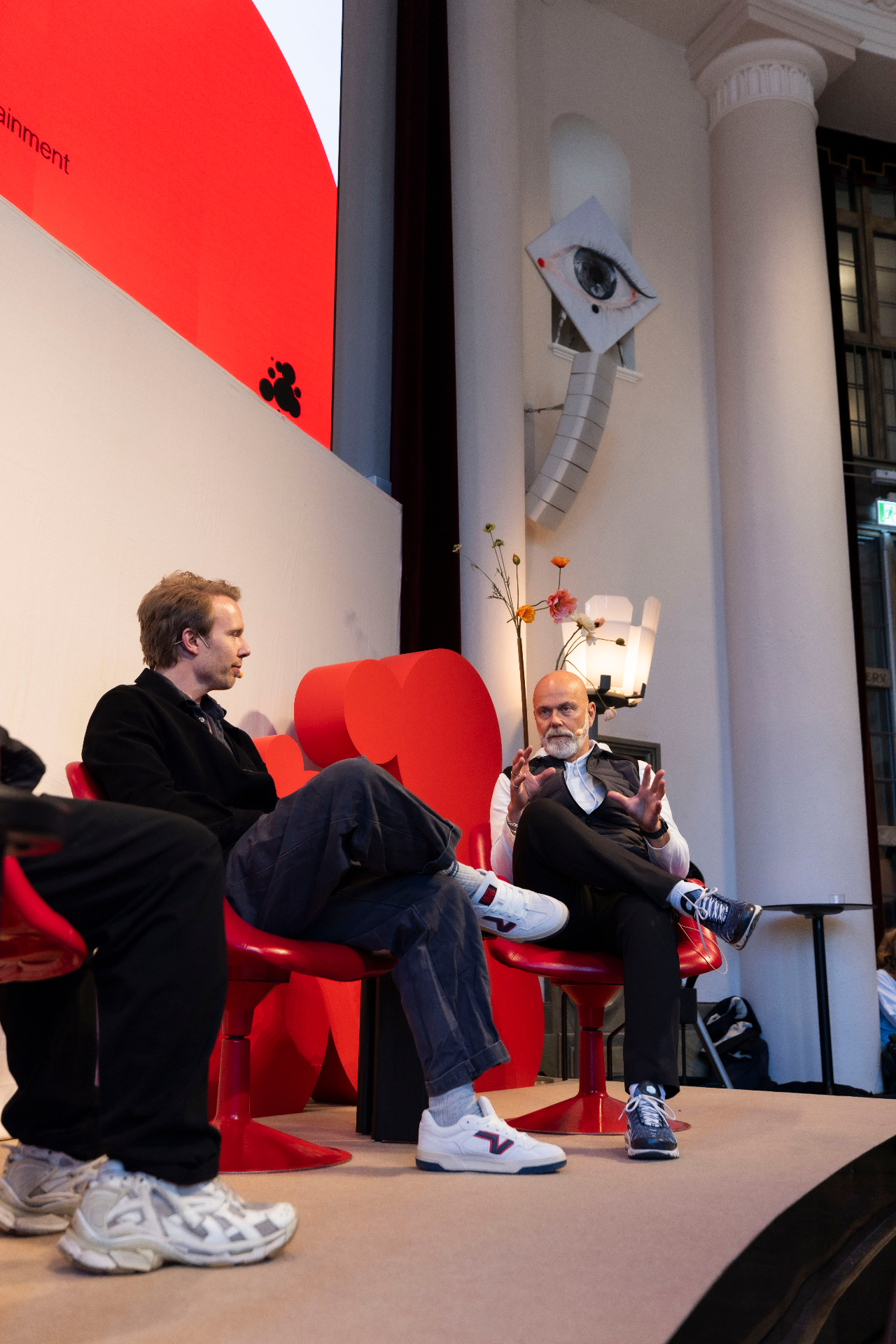
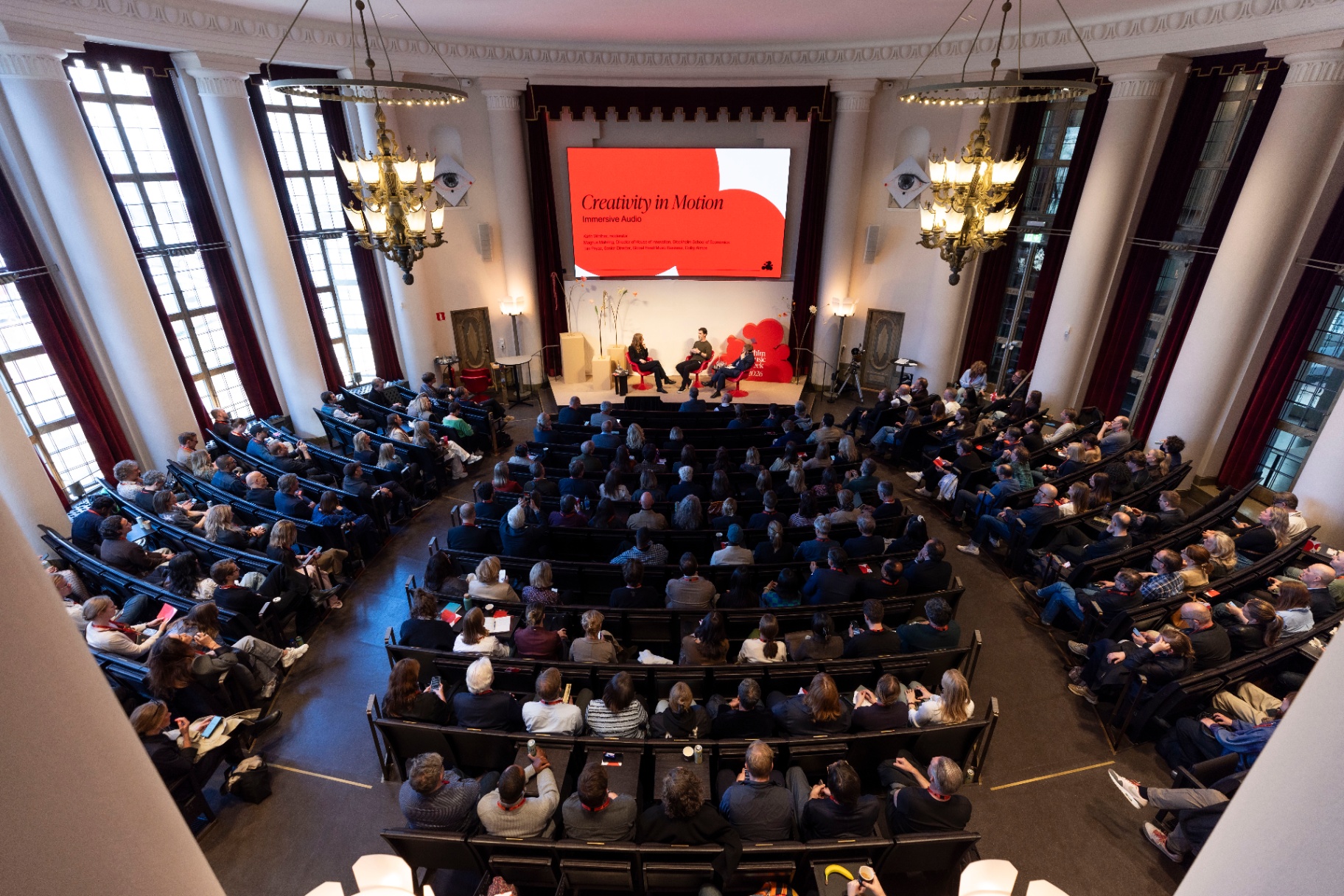
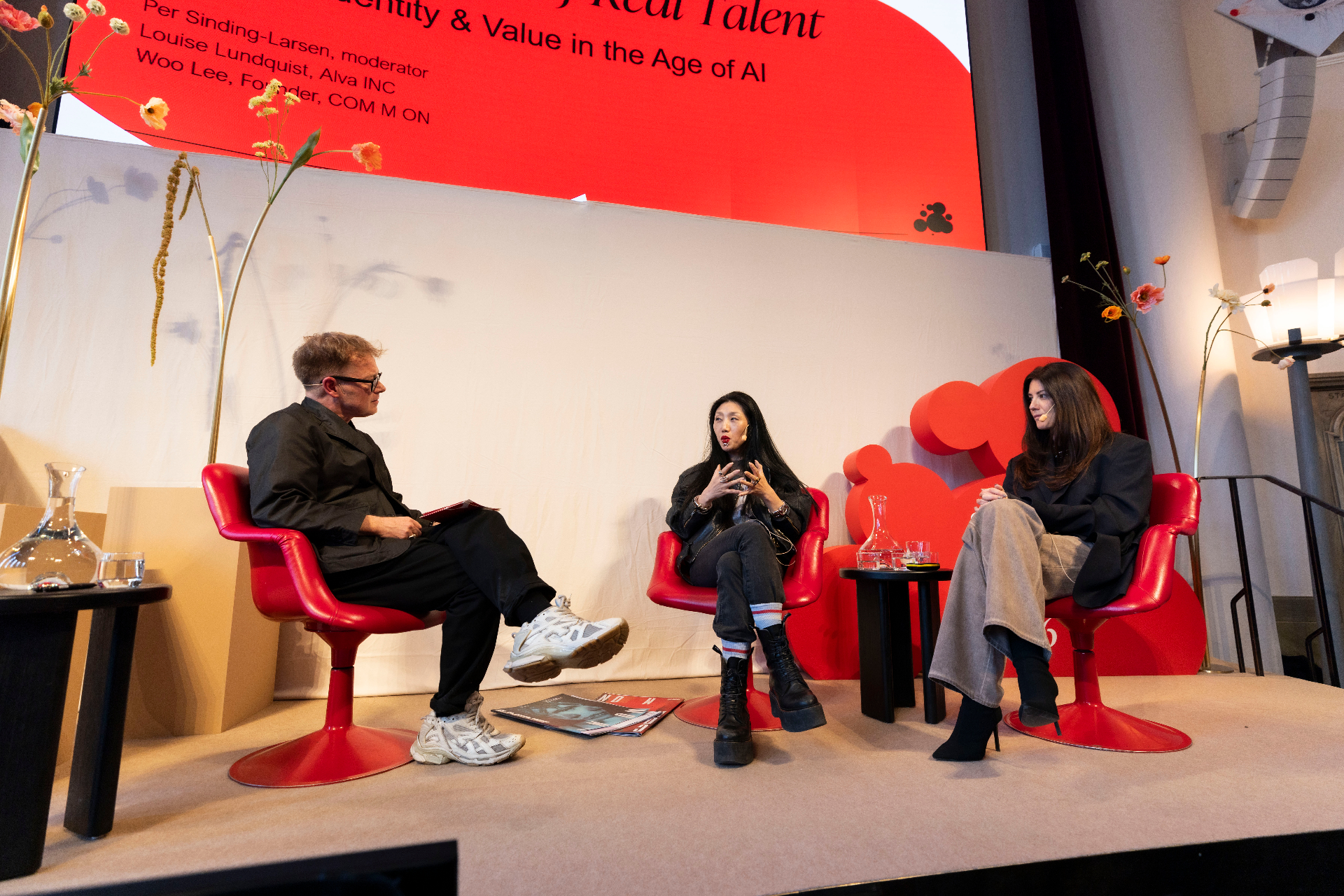
Across the final sessions, the conversation widened to identity, value and ownership. Louise Lundquist of Alva and Woo Lee of COMMON on digital twins. Then a Rethinking Value panel moderated by Jonas Bonnier, with Oscar Höglund of Epidemic Sound, Linda Portnoff of Tangy Market and Simon Gozzi of STIM, on what a new business and rights economy might look like. Different entry points into the same question Johansson had named earlier: where, exactly, the value sits, and who is allowed to capture it.
Earlier in the day, the opening conversation had approached the same ground from another angle. Jeff Chang of Google DeepMind, in dialogue with Roberto Verganti about AI and the human feeling of awe, left the room with a phrase that held the rest of the afternoon together. Asked what the future sounds like, Chang reached for something Japanese.
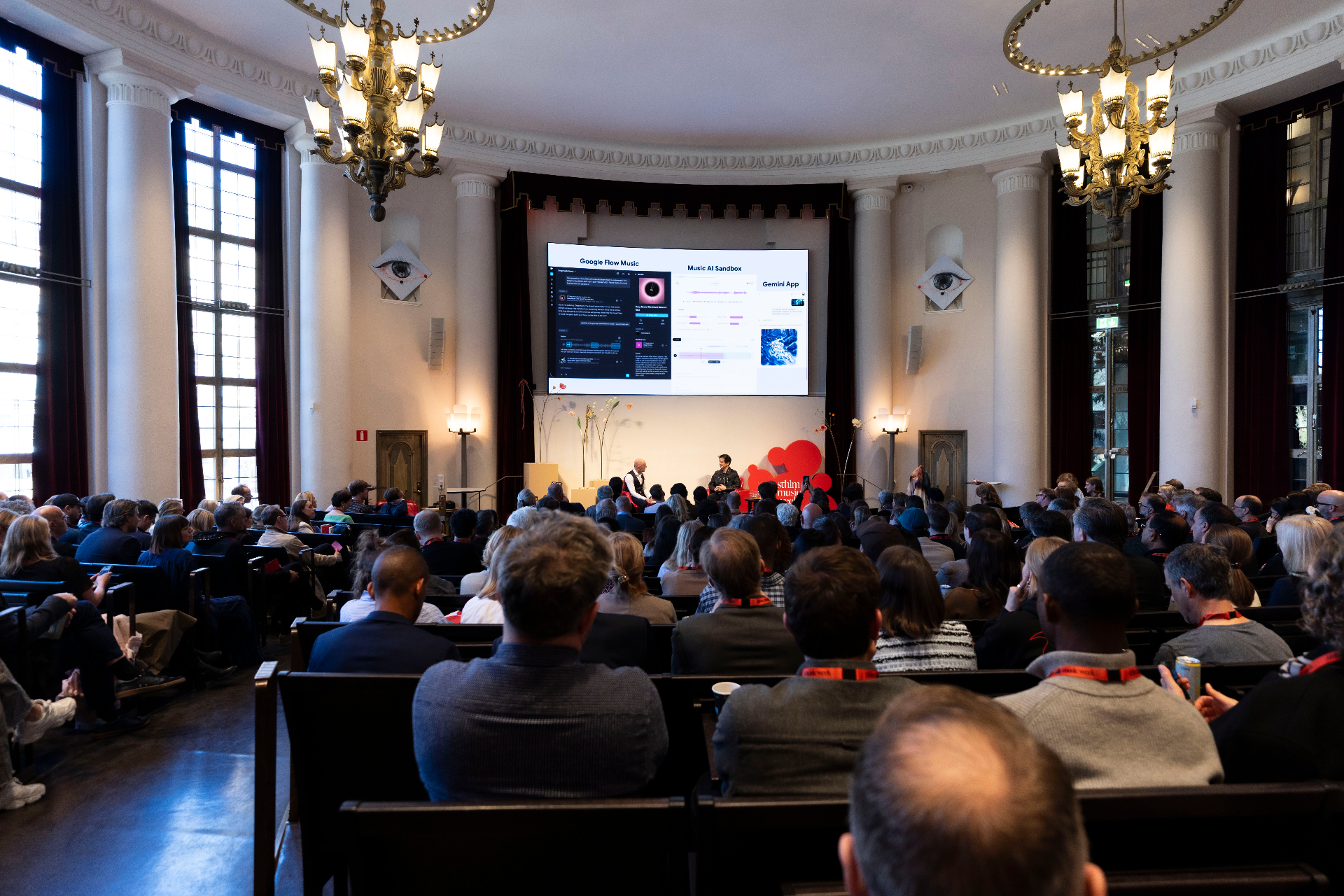
Chang had spent his fireside chat with Roberto Verganti making a related point in practice. The tools coming out of DeepMind, Flow Music, the Music AI Sandbox, Gemini, come with a full control surface beyond the prompt box. He walked through the controls. Sliders and dials for tempo, key, instrumentation, density, mood, the texture of a vocal, the weight of a low end. Almost every parameter in a piece of music exposed as something you can nudge, hold, push, pull back. The professional craft of music, made legible as a control surface. The prompt is the doorway, and the work still happens in the choices, hundreds of them, made by someone who knows what they are listening for.
He showed clips from sessions with artists, among them Wyclef Jean, building and pressure-testing the tools inside actual studio work. The framing was deliberate. Chang himself plays several instruments, and on his team at DeepMind, he said, it is a hiring requirement. Everyone building these products has to play. The brief is to design from inside the practice, with musicians, for musicians. Tools made to extend what musicians can do.
There is a Japanese phrase, ichigo ichie. One time, one meeting. Every time you gather for a conversation, it is unique to that moment in time and space.
Jeff Chang, Google DeepMind
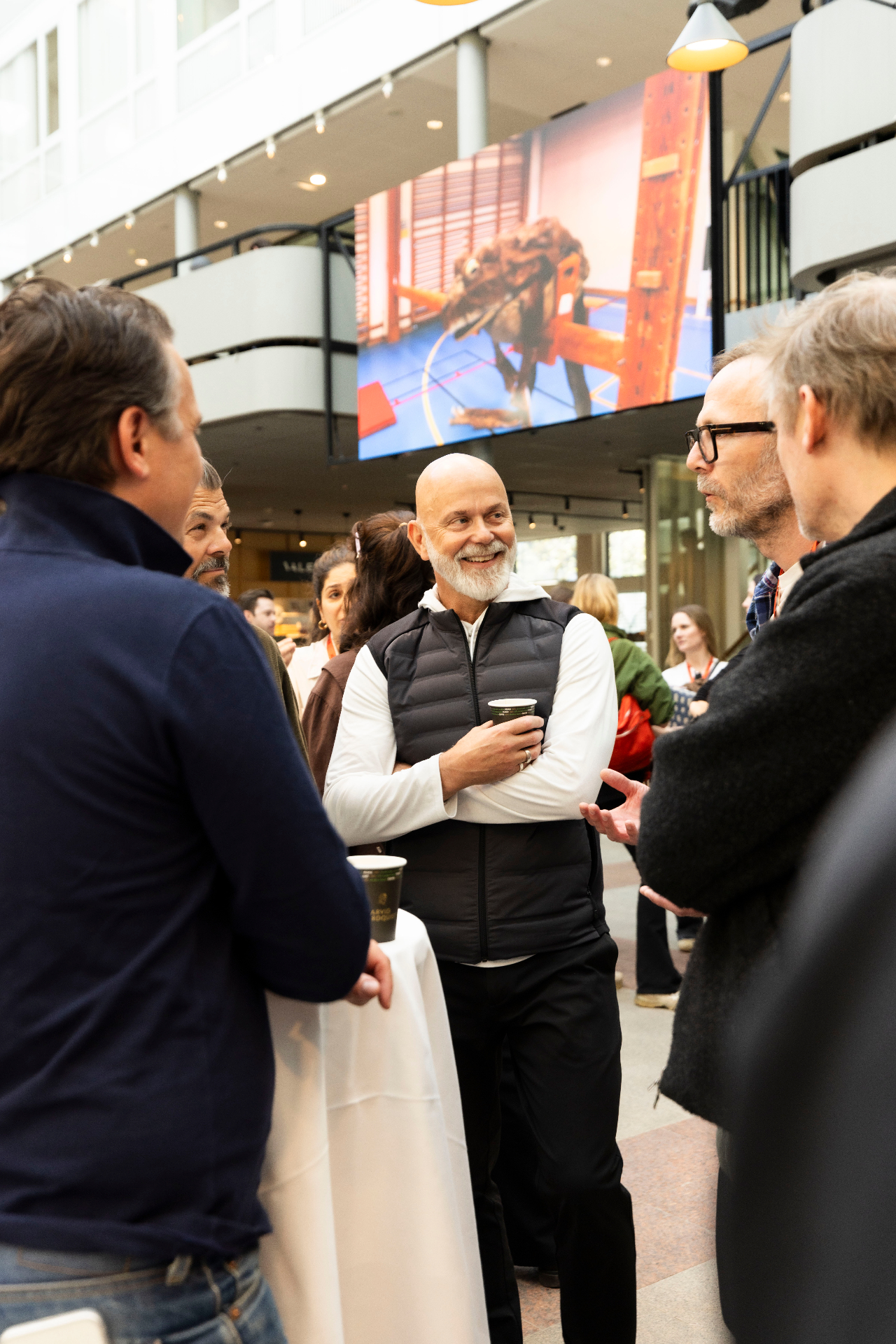
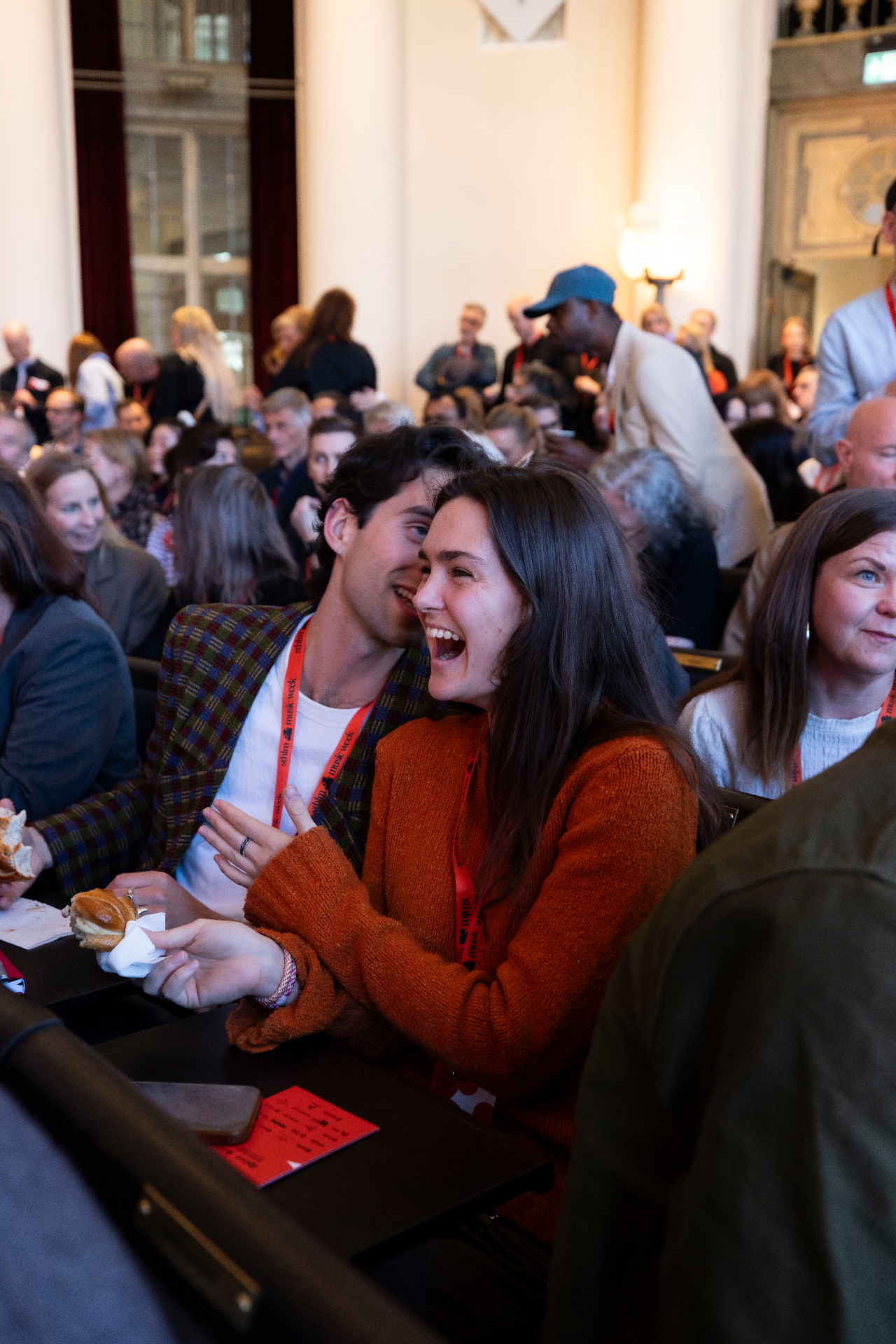
A reminder that not everything scales, and that some value still sits in the moment itself.
Which is where the day landed. In a room that held the question long enough to sharpen it. Seidefors and Verganti closed under a title that had, by then, become descriptive rather than aspirational.
Questions for the Unheard.
Three days in.